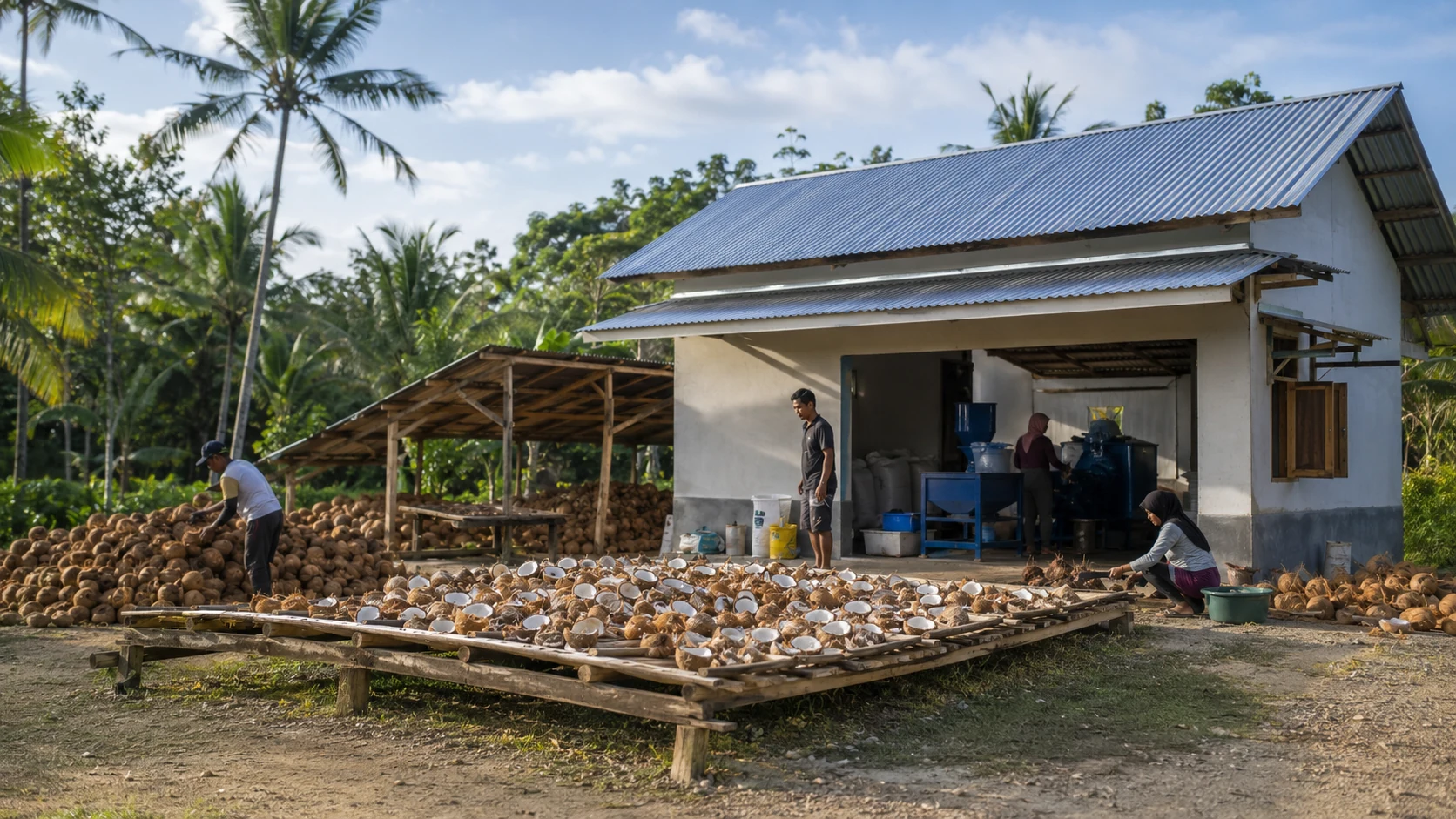
Nias Utara Set for a Coconut Production House
An official North Sumatra update says a Rp2 billion facility is planned with copra, solar-drying and related processing equipment.
Read Just In →
WAZ Coconut Insights
Research-led explainers, buyer guides and application insights covering Indonesia's coconut value chain — from husk, fibre and growing media to industrial uses, trade requirements and emerging opportunities.
Just In / Coconut News
Short, verified updates on policy, production, exports, investment and capacity. View all coconut news →
An official North Sumatra update says a Rp2 billion facility is planned with copra, solar-drying and related processing equipment.
Read Just In →
An official update records contracting and verification progress plus October–November implementation targets.
Read Just In →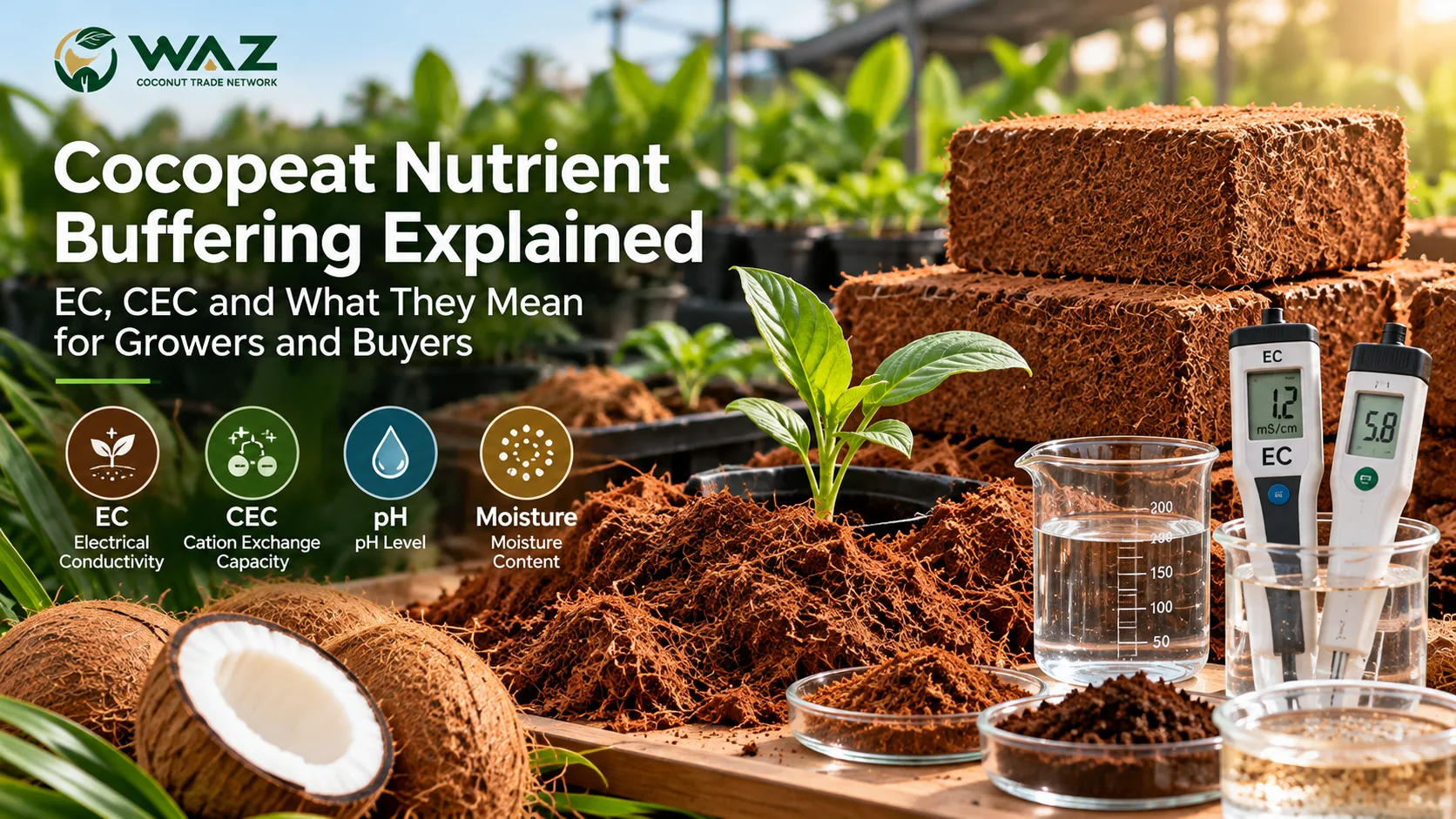
Electrical conductivity and cation exchange capacity answer different questions. Here is how to assess cocopeat without confusing salinity with nutrient buffering.
Read the insight →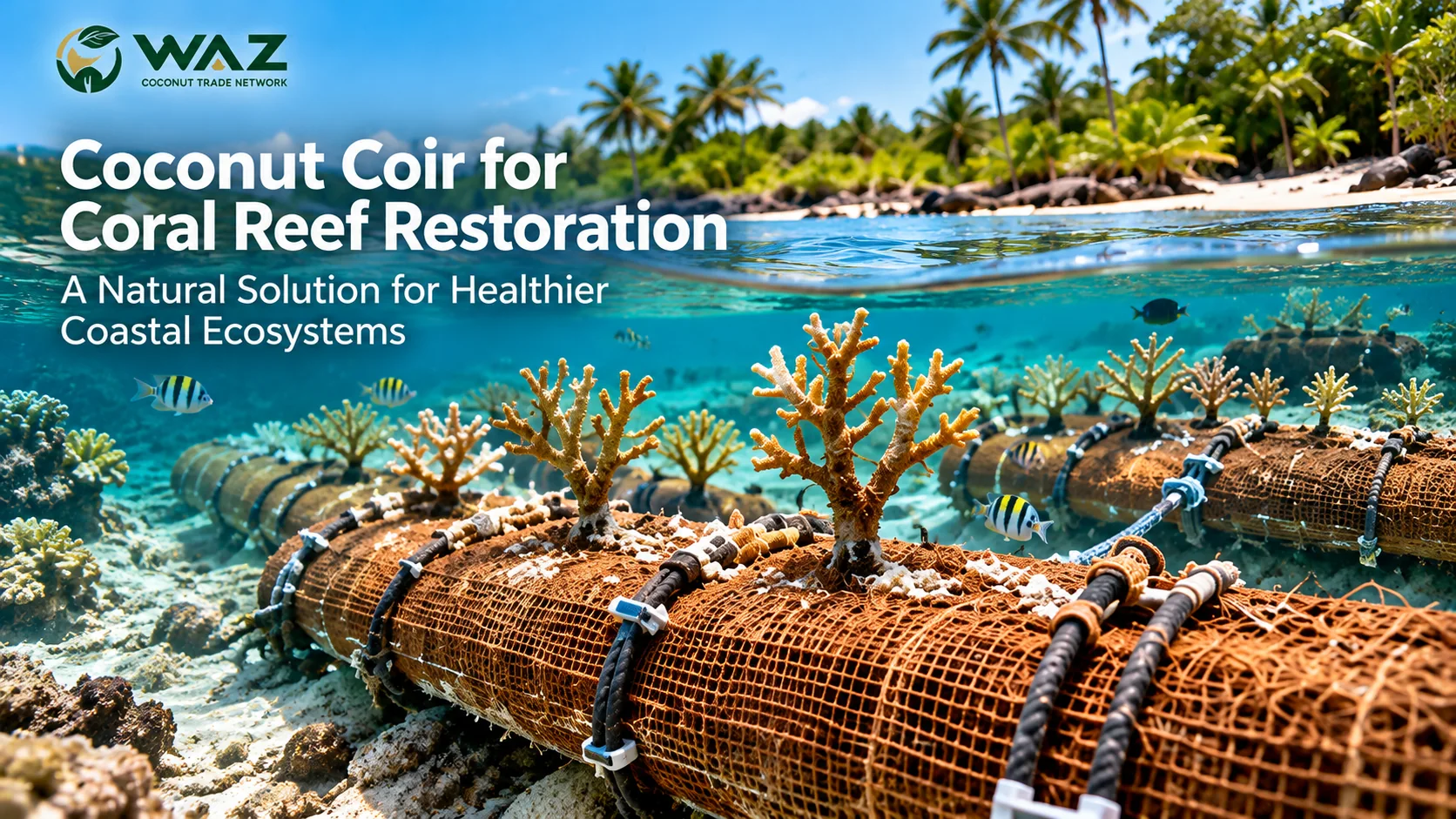
Biodegradable coir mesh has been tested for stabilising loose coral rubble, but reef outcomes depend on mesh design, location and ecological monitoring.
Read the insight →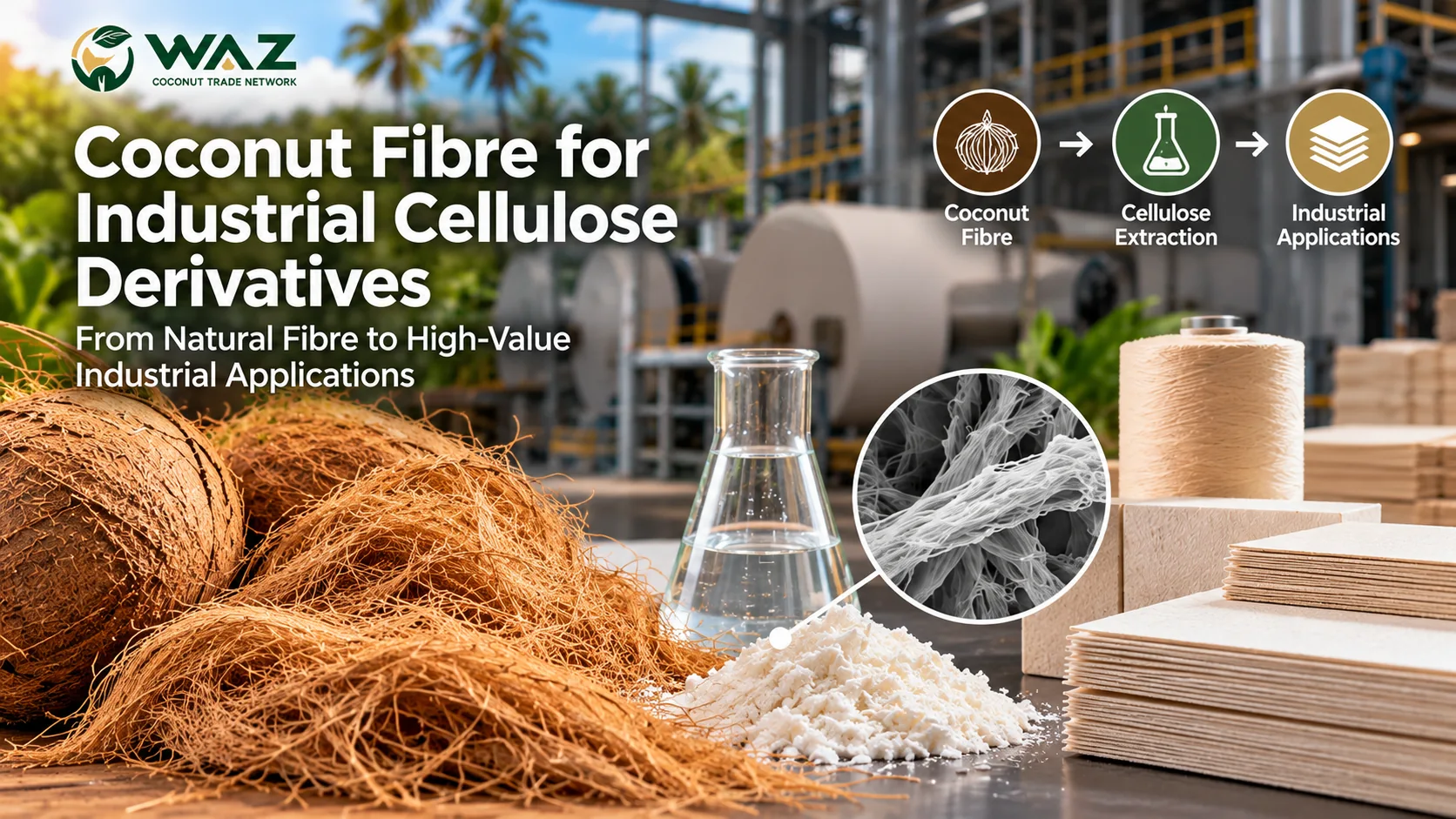
New work on coconut-fibre pretreatment and CMC synthesis points to chemical-industry possibilities beyond conventional coir products.
Read the insight →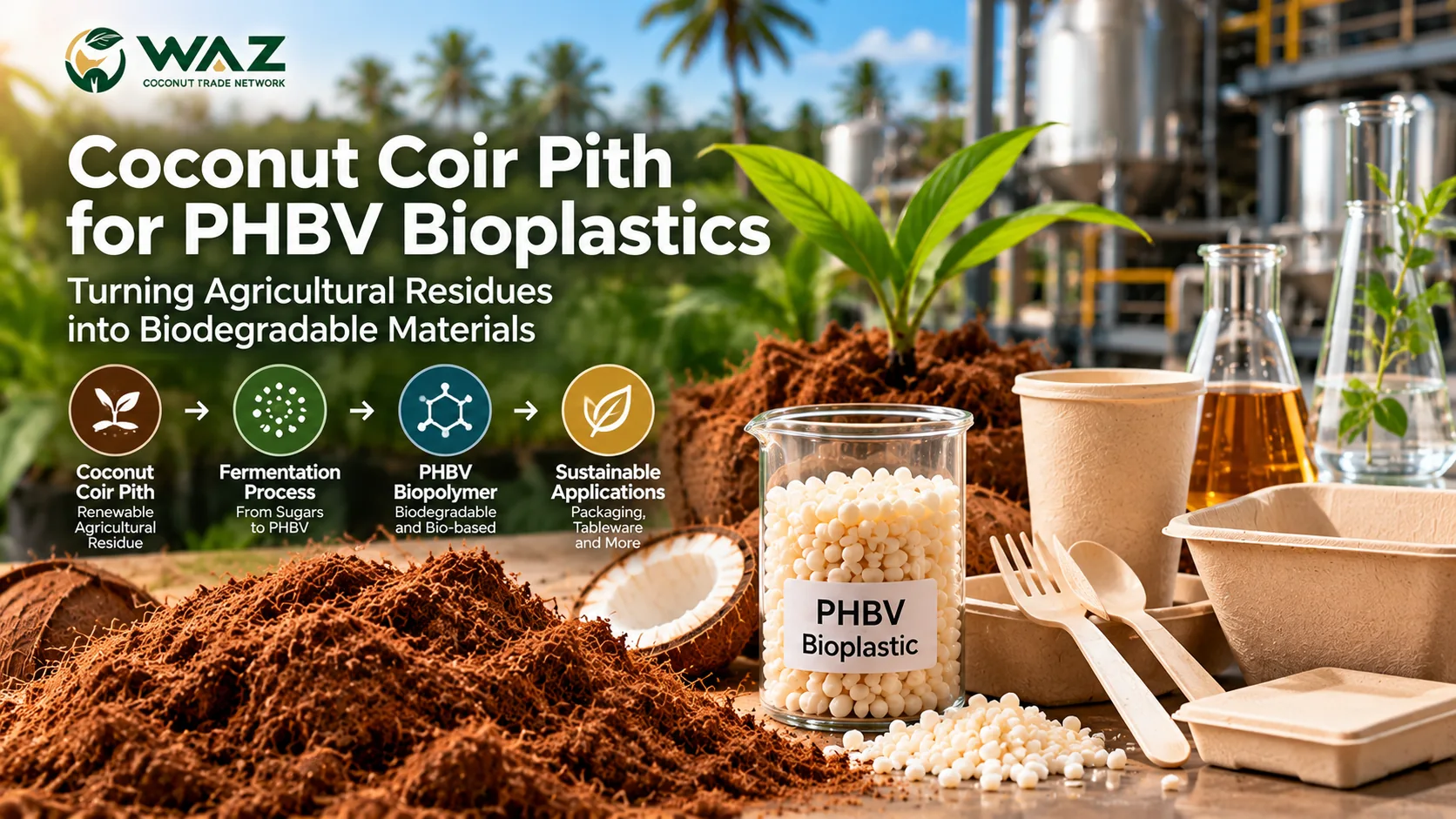
Researchers have converted pretreated coconut coir pith into fermentable sugars and PHBV polymer. Commercial scale and end-of-life claims still require evidence.
Read the insight →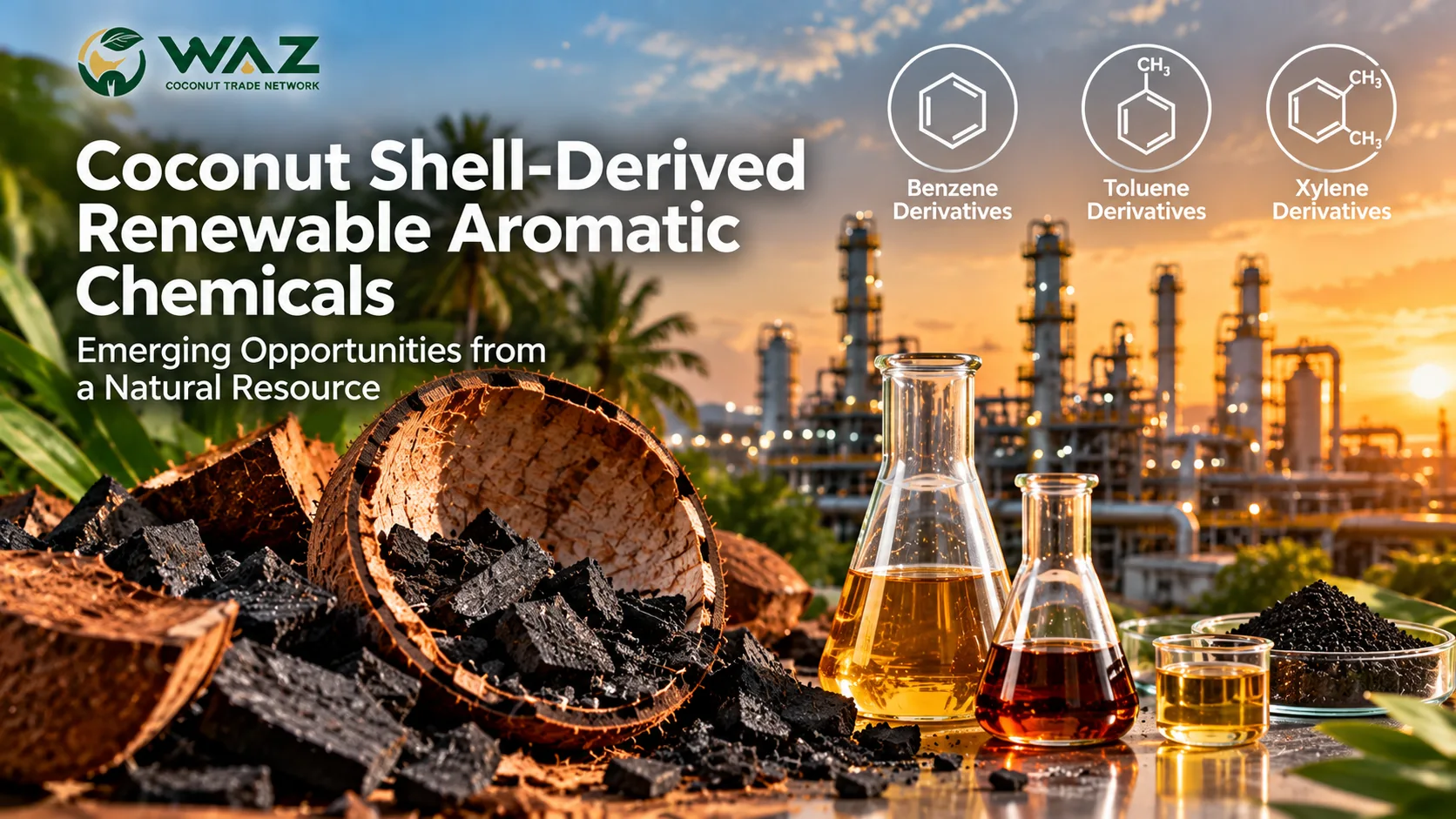
A 2026 lignin-first study explored converting coconut-shell components into aromatic monomers while recovering cellulose-rich material.
Read the insight →Featured Insight
Our cornerstone series explains how one agricultural by-product can move into multiple commercial pathways — and what buyers should understand before sourcing.
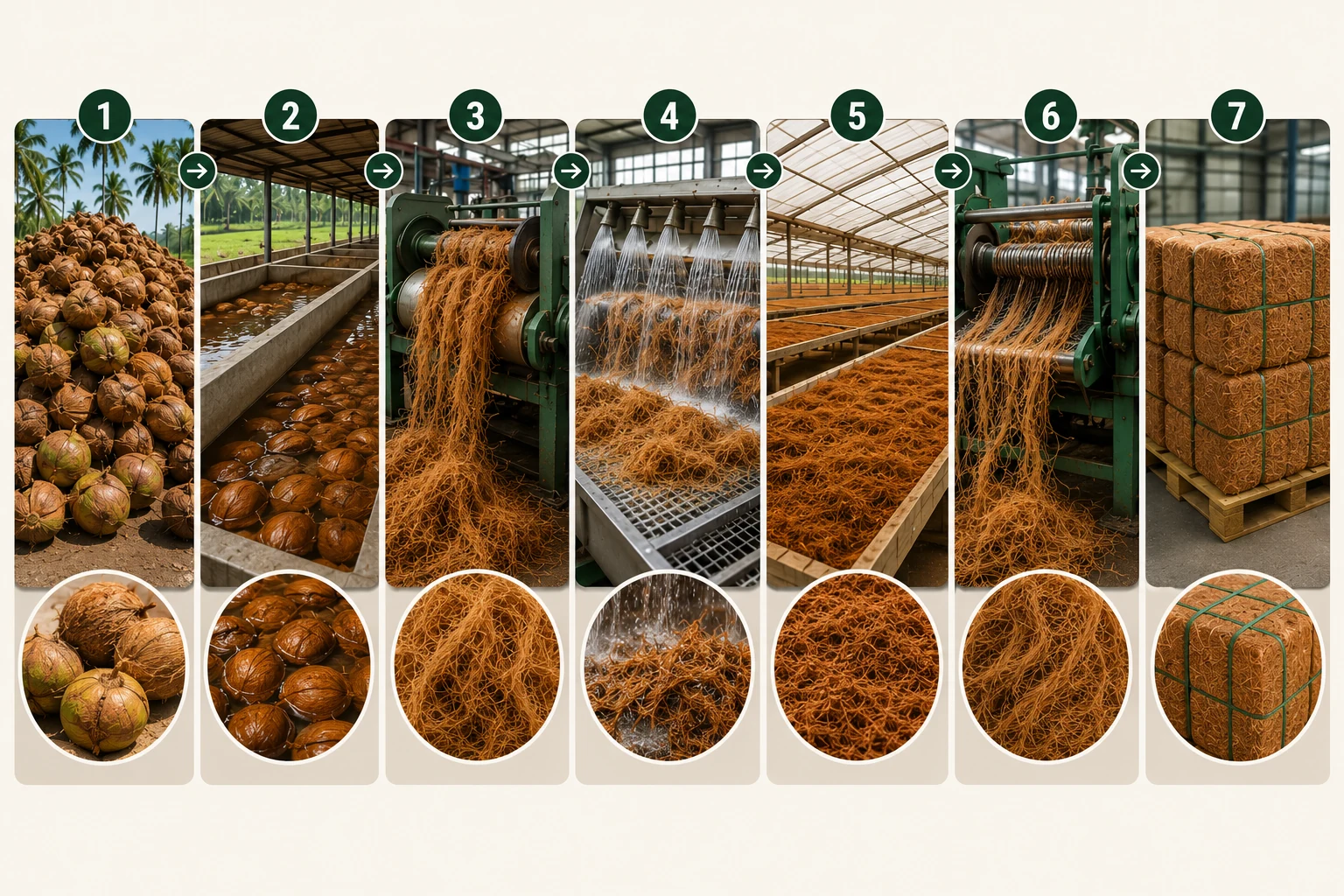
Follow the husk from fibre extraction through coir, pith, growing media and downstream applications, with an Indonesia-focused trade perspective.
Read the insight →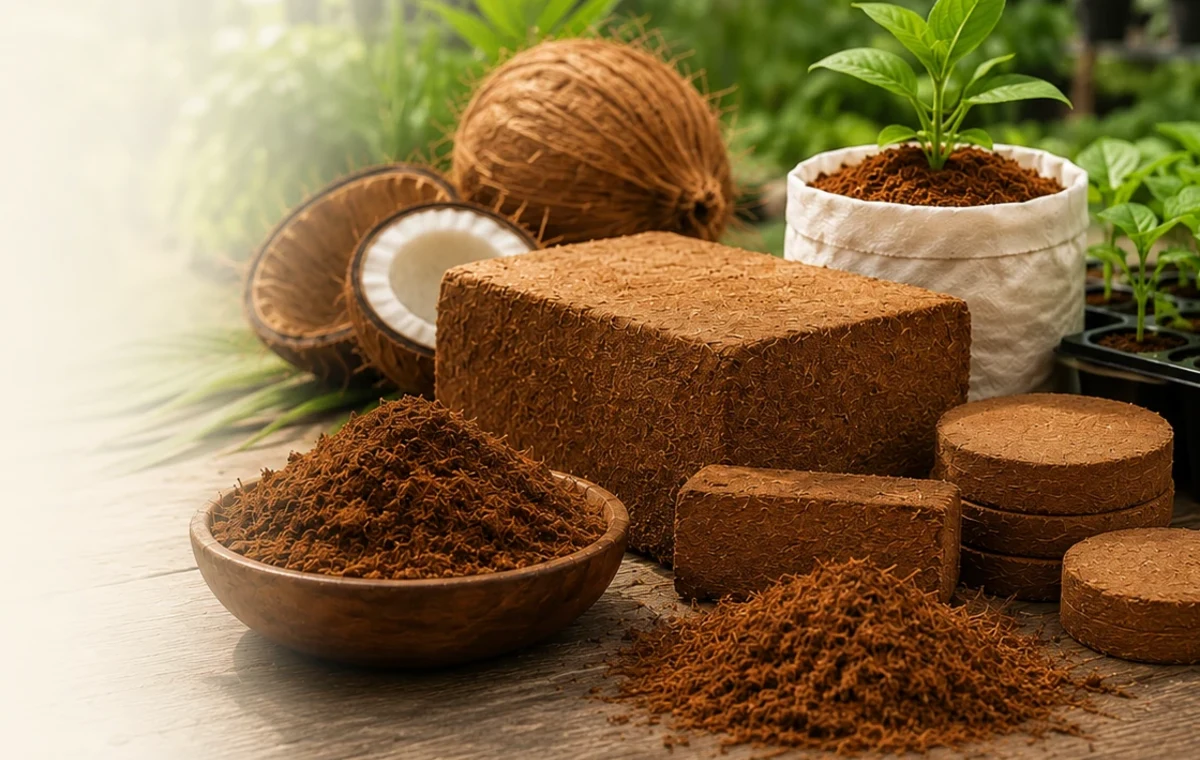
A buyer-focused guide to salinity, washing, measurement context and why EC should be understood alongside other substrate properties.
Read the insight →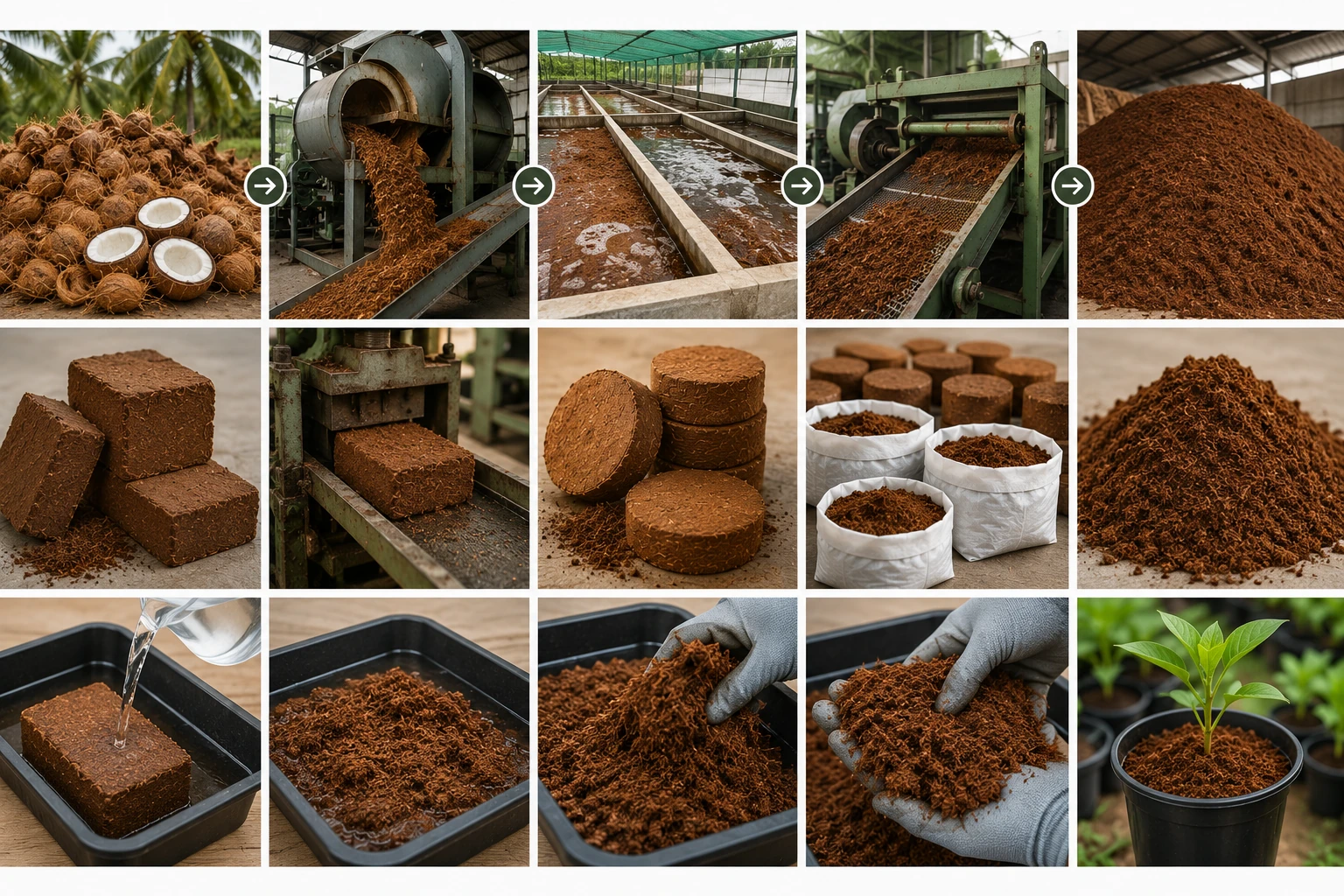
Why washing and buffering are different treatments, what each is intended to address, and what buyers should specify before sourcing.
Read the insight →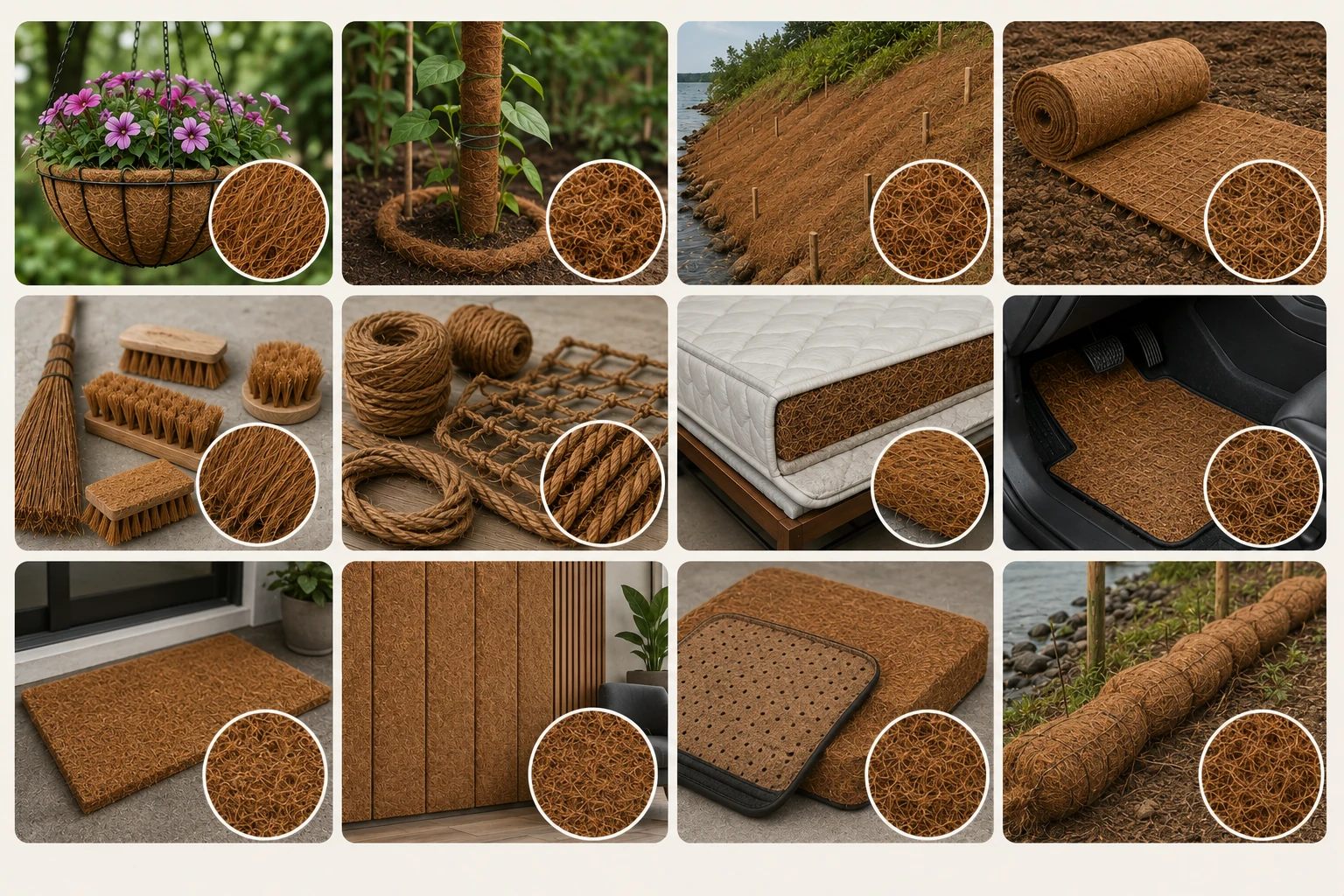
A research-led guide to coir geotextiles, slope protection, vegetation-assisted restoration and the specification questions project buyers should ask.
Read the insight →A buyer guide to structure, aeration, water behaviour, chip size, fines, salts and the specification questions that matter before sourcing.
Read the insight →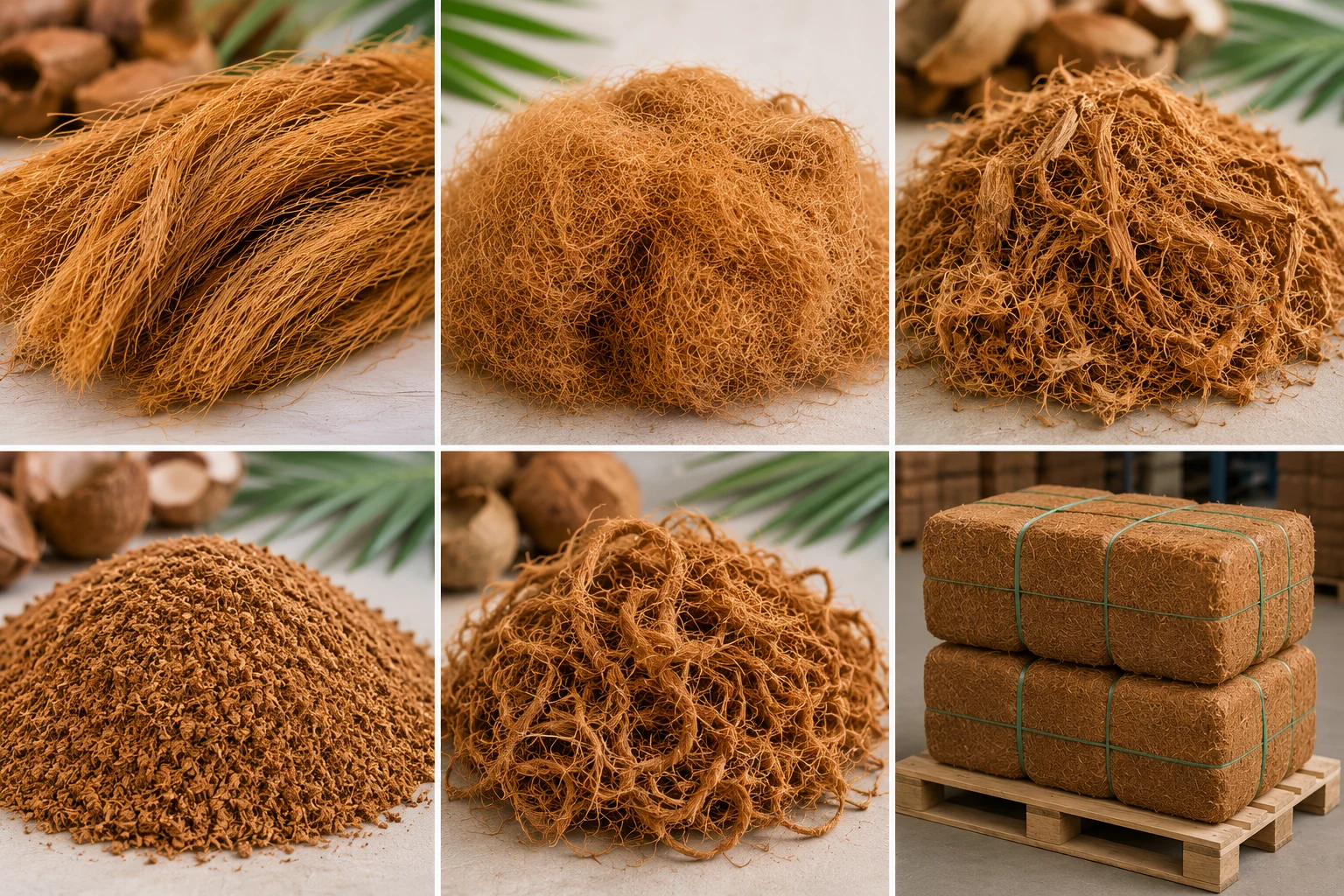
A buyer-focused guide to upholstery, composites, acoustic materials, construction and why industrial fibre specifications vary by manufacturing process.
Read the insight →
A buyer-focused view of downstreaming, processed coconut pathways, active export examples and the qualification questions international buyers should ask.
Read the insight →
A policy-to-market guide to integrated coconut industrial zones, replanting, zero-waste processing, logistics, investment and the commercial implications of Indonesia’s long-term downstreaming programme.
Read the insight →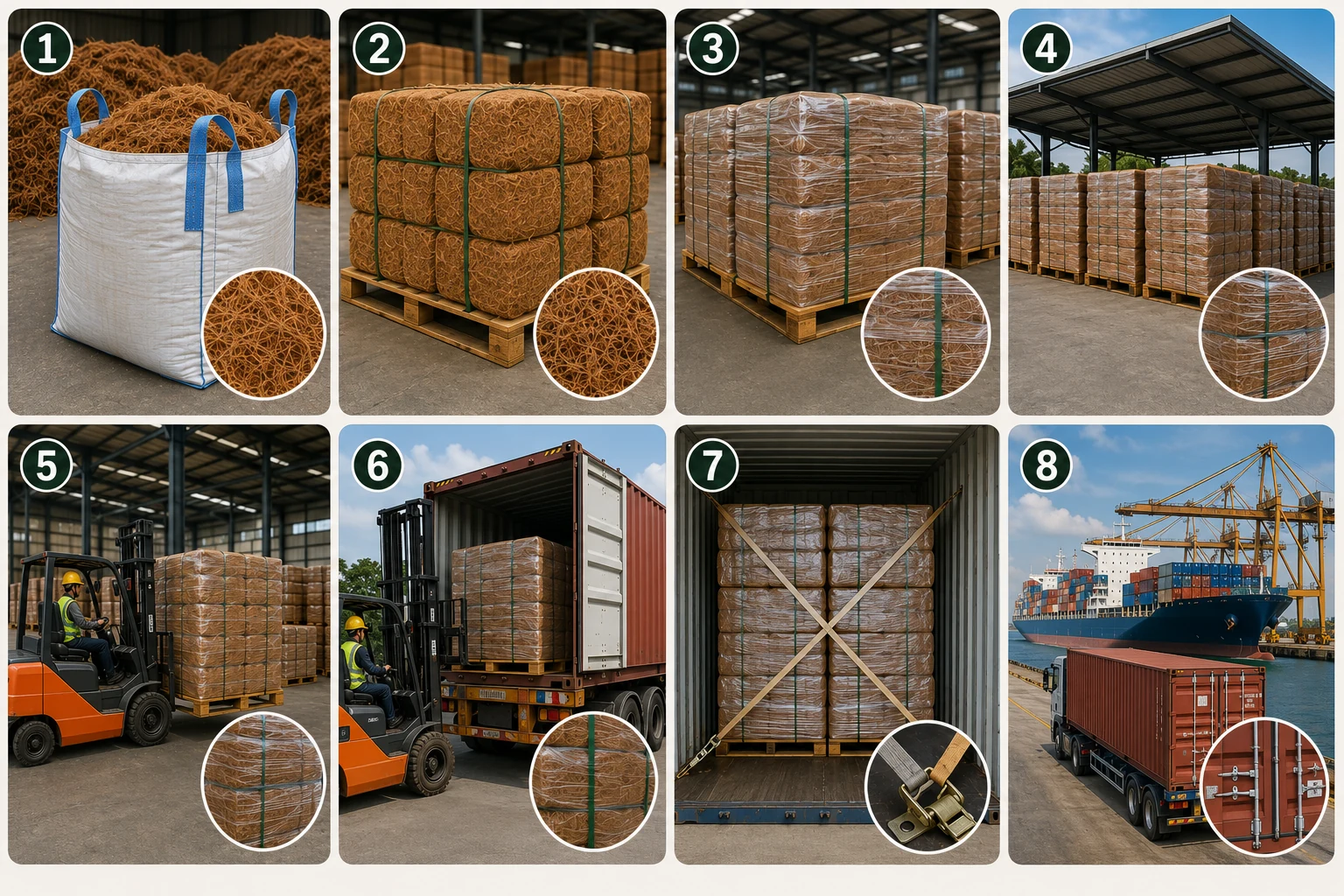
A 2026 life-cycle assessment found lower global-warming impacts for coir geotextiles than synthetic comparators.
Read the insight →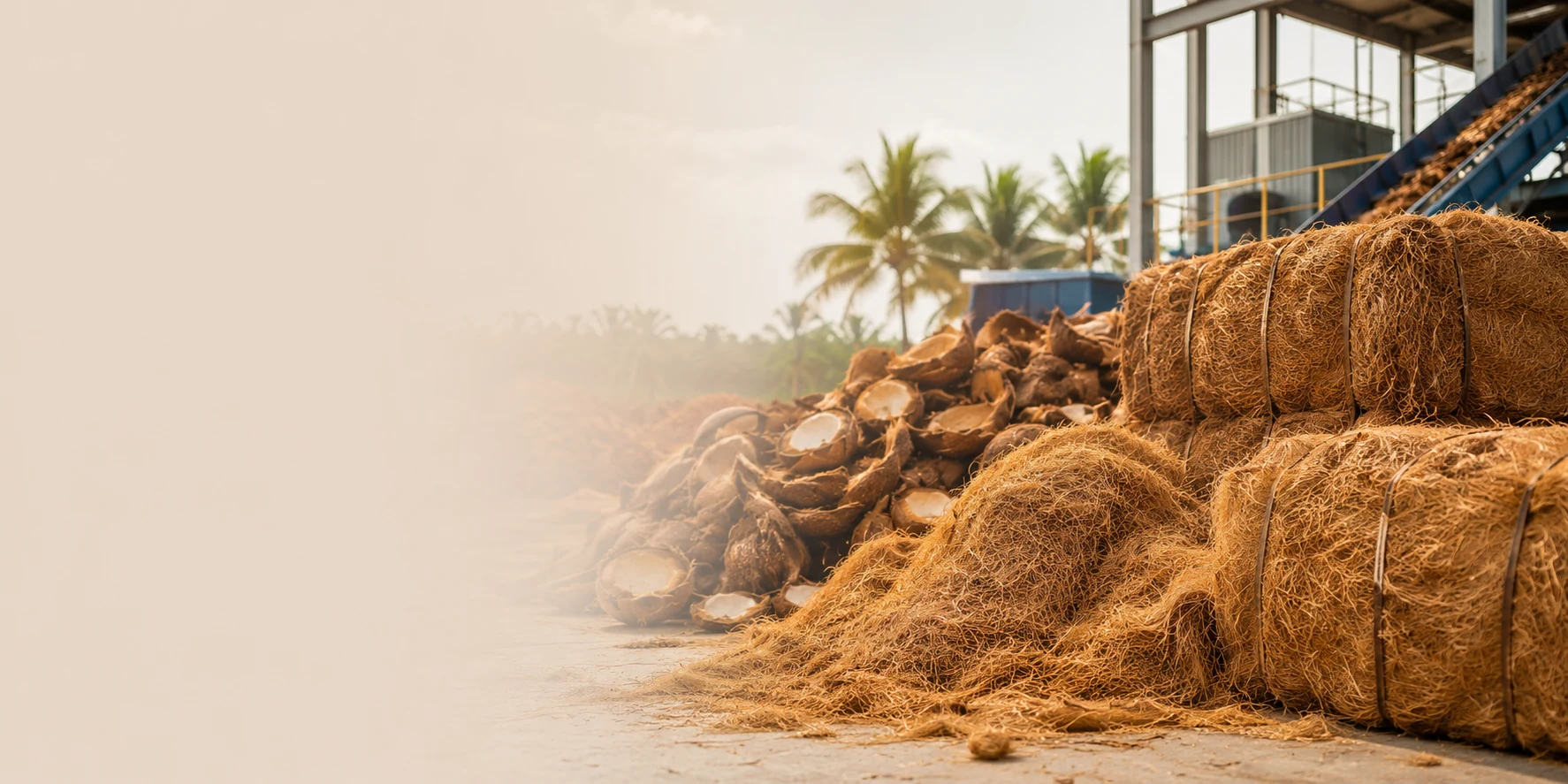
A 2026 Scientific Reports study tested coconut-fibre filters for backward erosion piping in dikes, opening an intriguing engineering pathway.
Read the insight →
Indonesia’s desiccated coconut exports expanded in early 2026 even as prices corrected. Here is what the latest ICC market data and a confirmed Gorontalo-to-Germany shipment tell buyers..
Read the insight →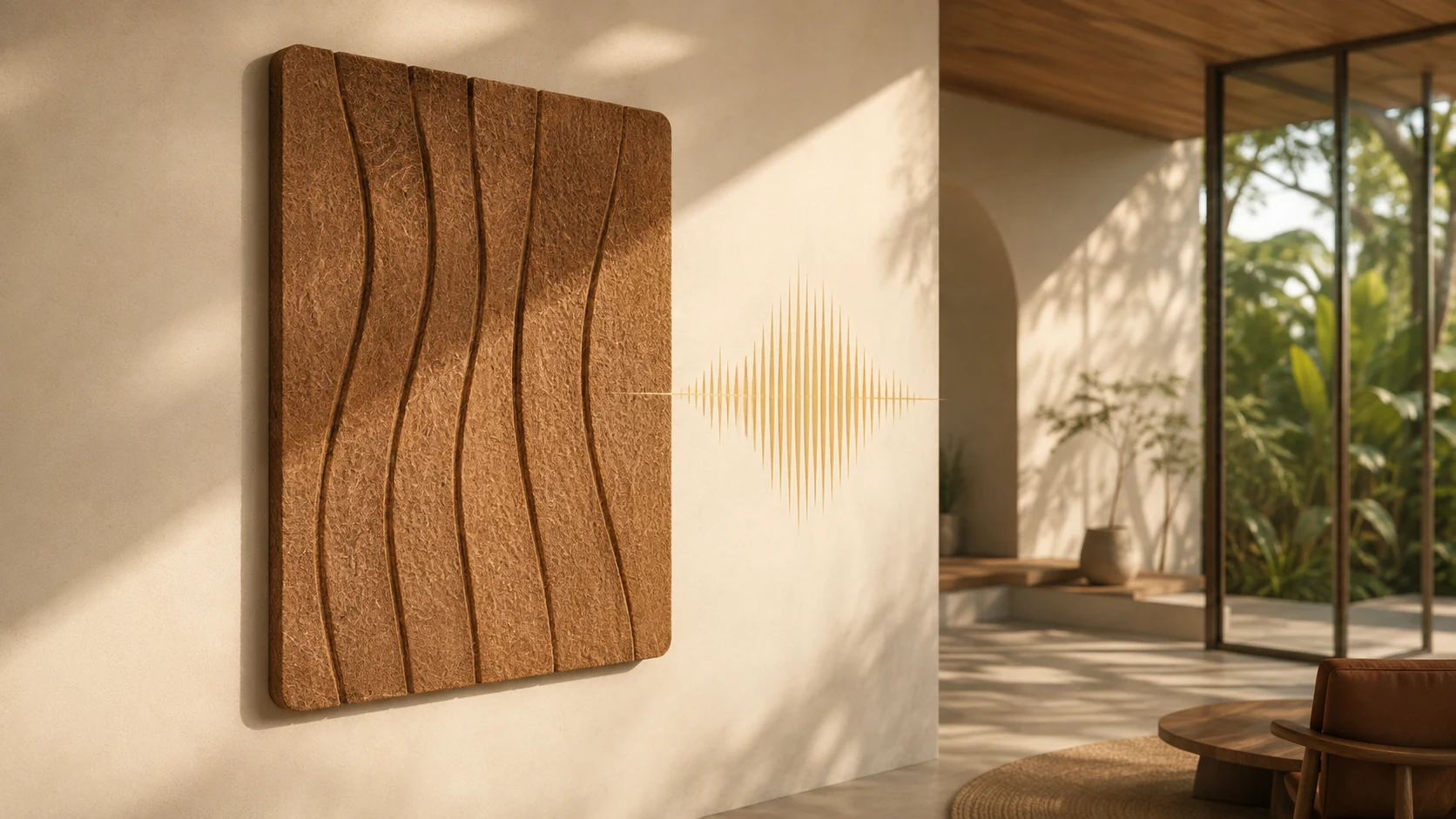
A 2026 study tested coir-pith and cement composite panels for sound absorption and insulation, opening a research pathway for cocopeat beyond horticulture.
Read the insight →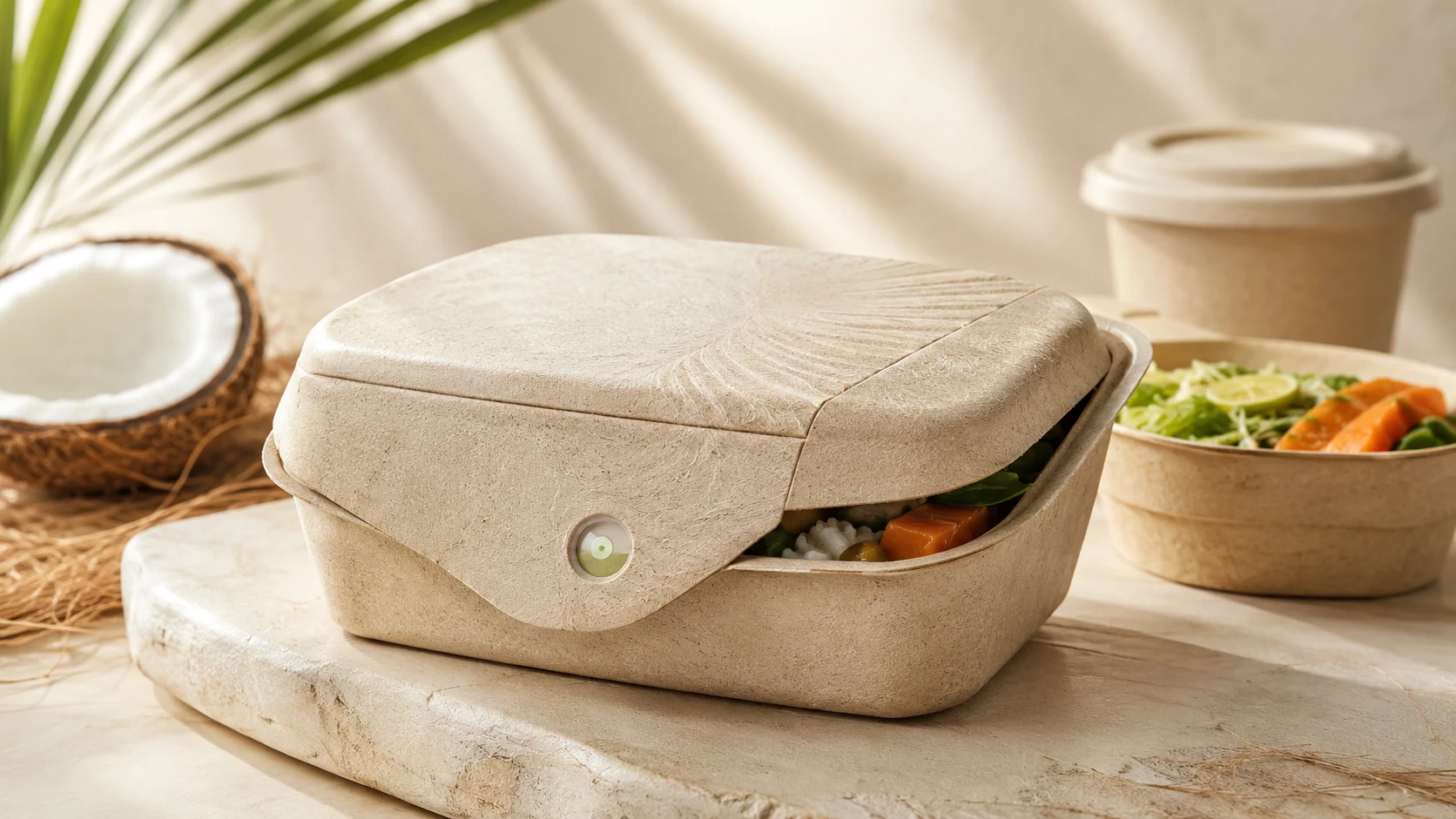
Research is exploring coconut-derived nanofibres, lignin and carbon dots for biodegradable films, UV shielding and intelligent freshness-monitoring packaging.
Read the insight →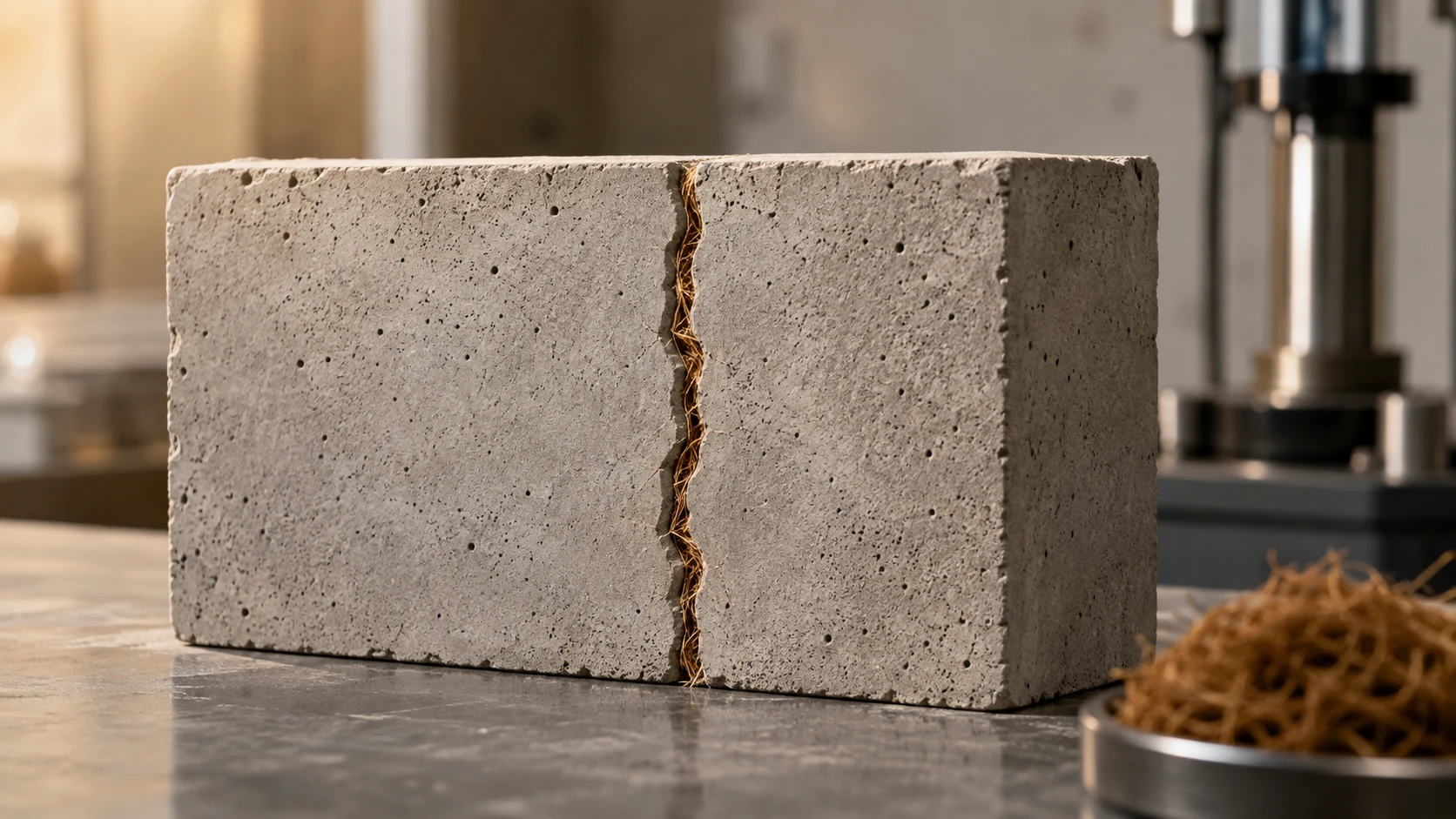
A 2026 study used silica-modified coconut coir as a carrier for self-healing material and reported substantial laboratory crack-width reductions in selected formulations.
Read the insight →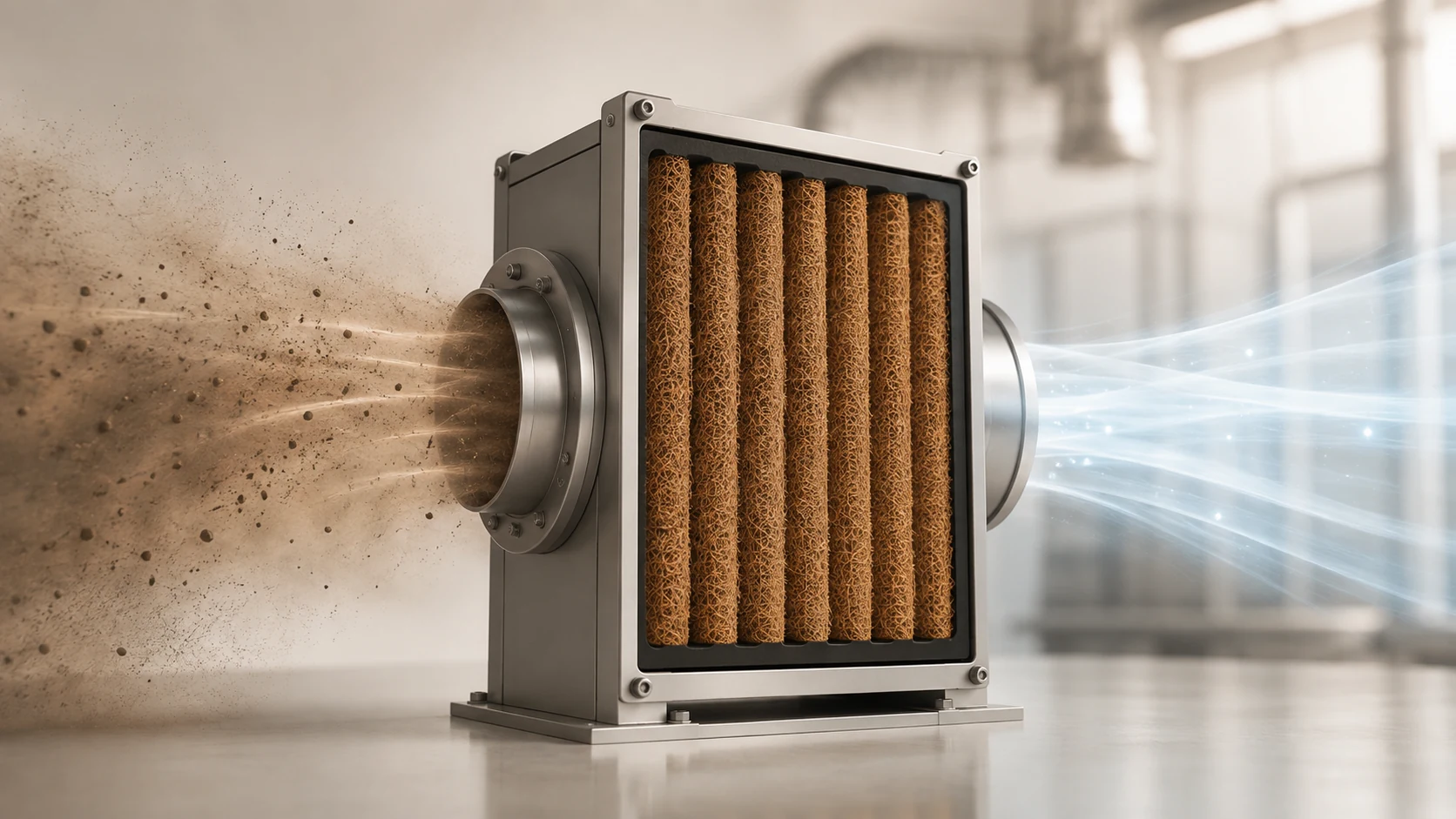
A 2026 study converted husk-derived cellulose into conductive carbon aerogels with very high PM capture under laboratory conditions.
Read the insight →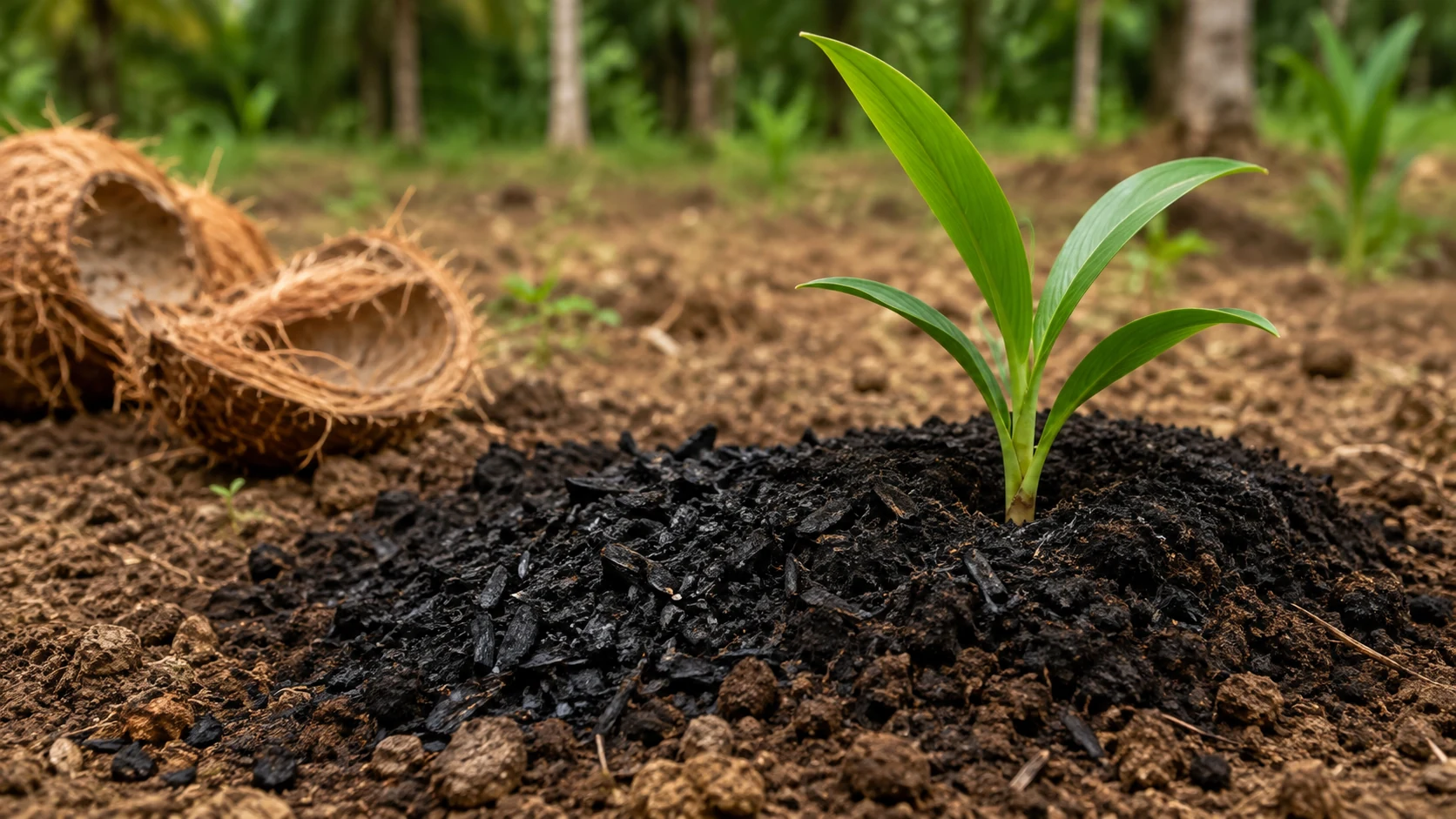
New 2026 research tested pyrolysis temperature and husk cut size to produce carbon-rich biochar for potential agricultural use.
Read the insight →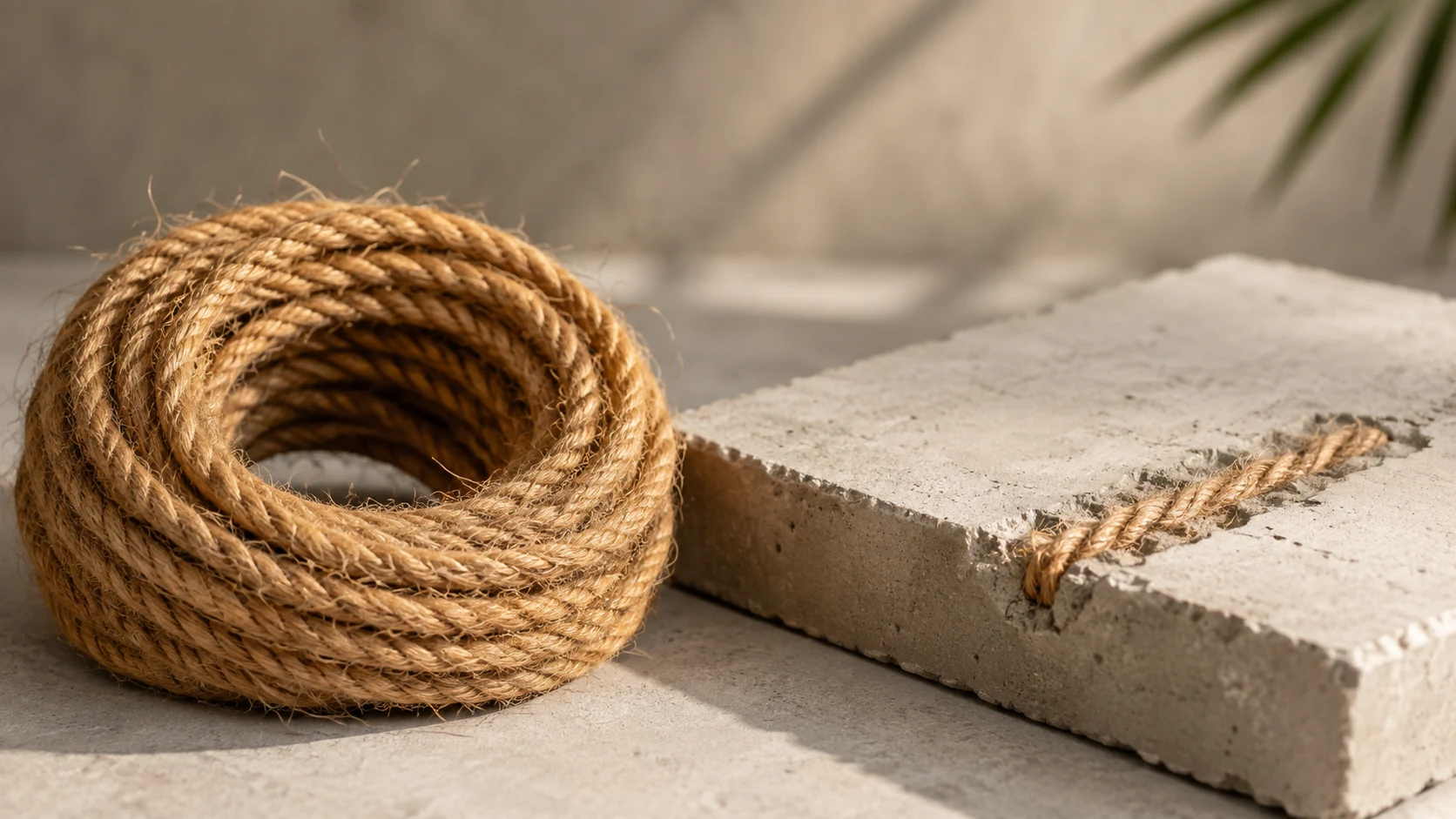
A practical product guide strengthened by 2026 TRM research on saline and alkaline exposure behaviour.
Read the insight →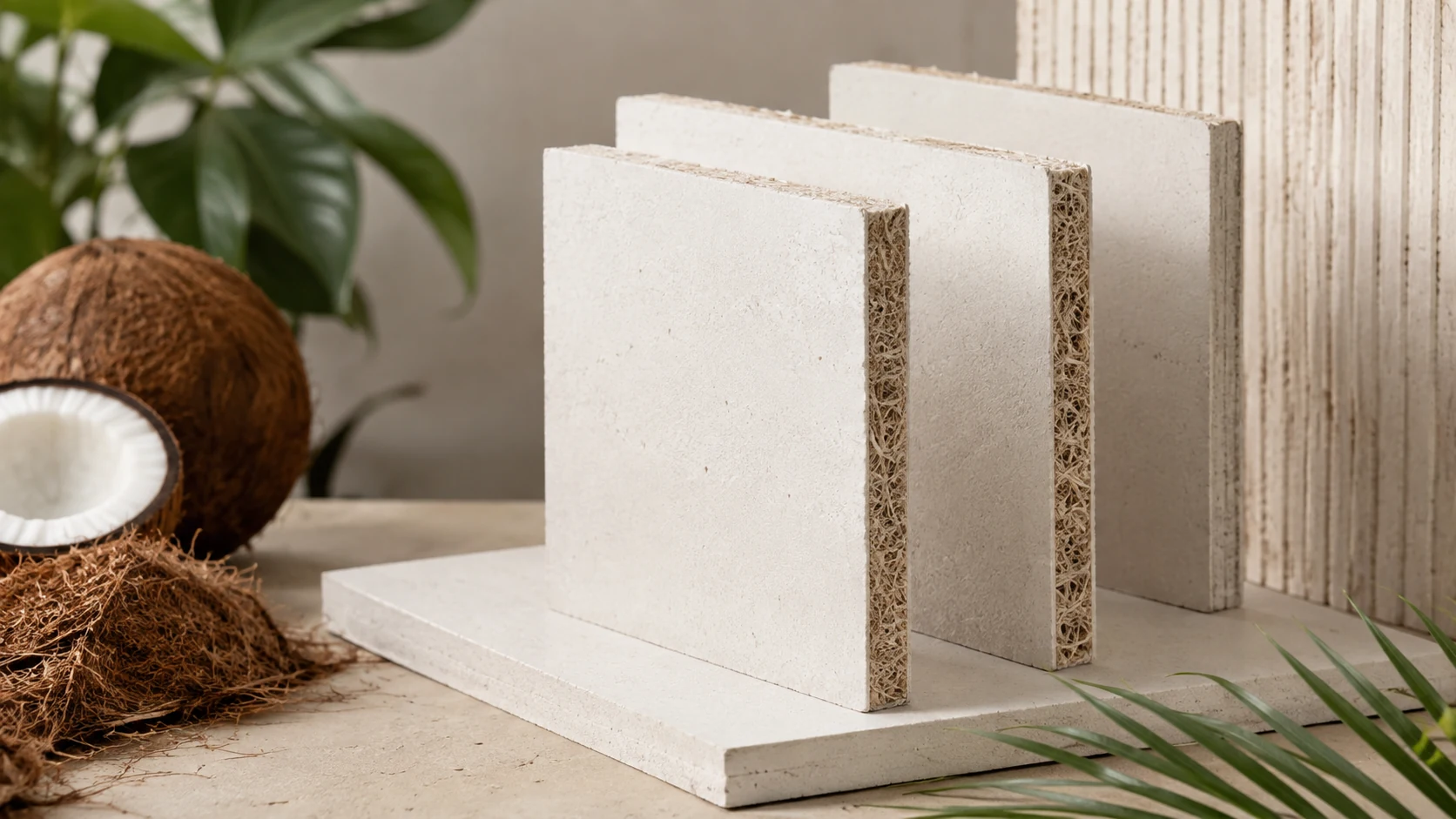
A 2026 Buildings study tested gypsum composites using pre-consumer coconut-fibre waste at up to 17.5% replacement.
Read the insight →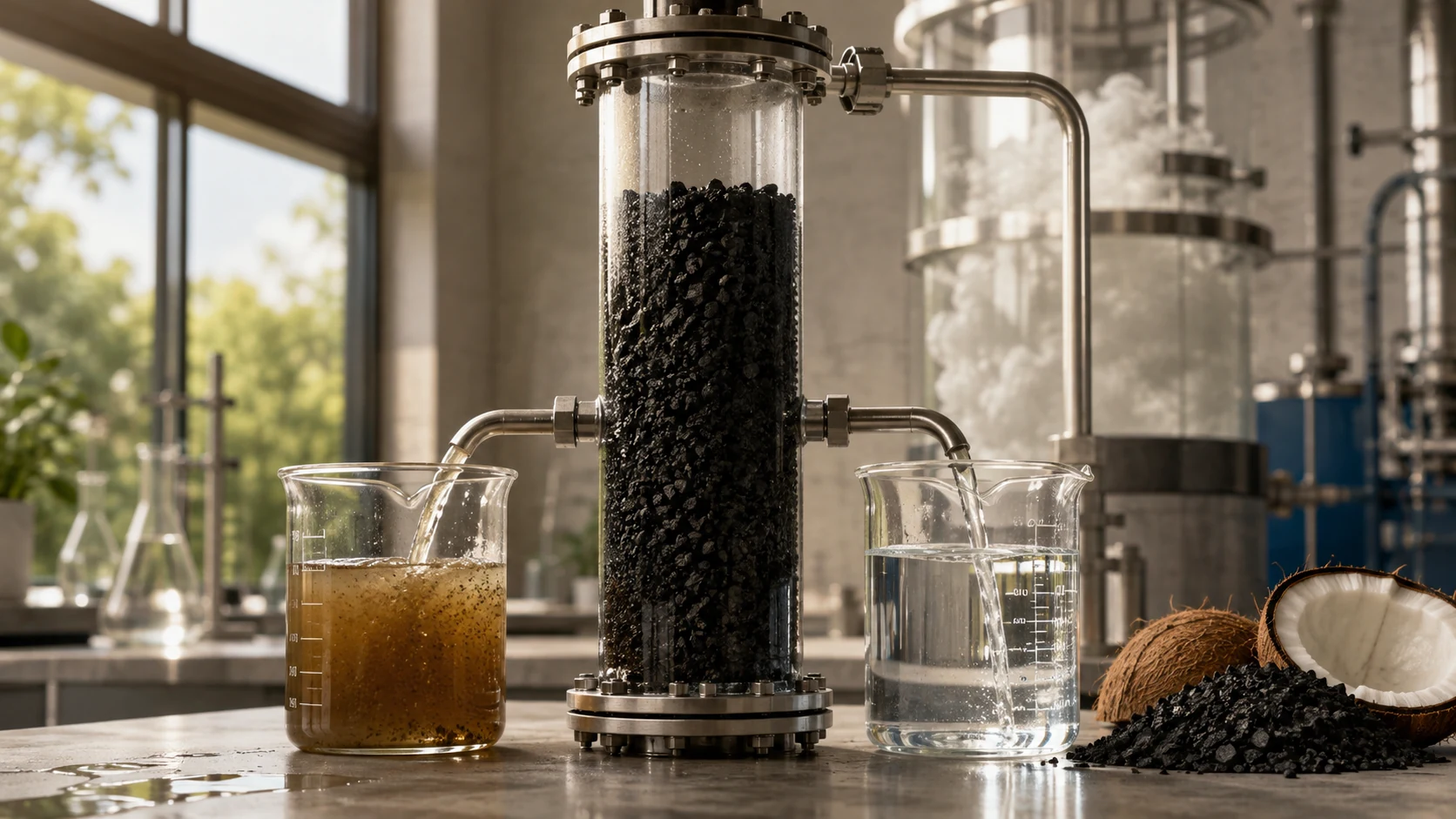
New research links coconut-derived biochar with CO₂ uptake, dye adsorption and a useful production-cost discussion.
Read the insight →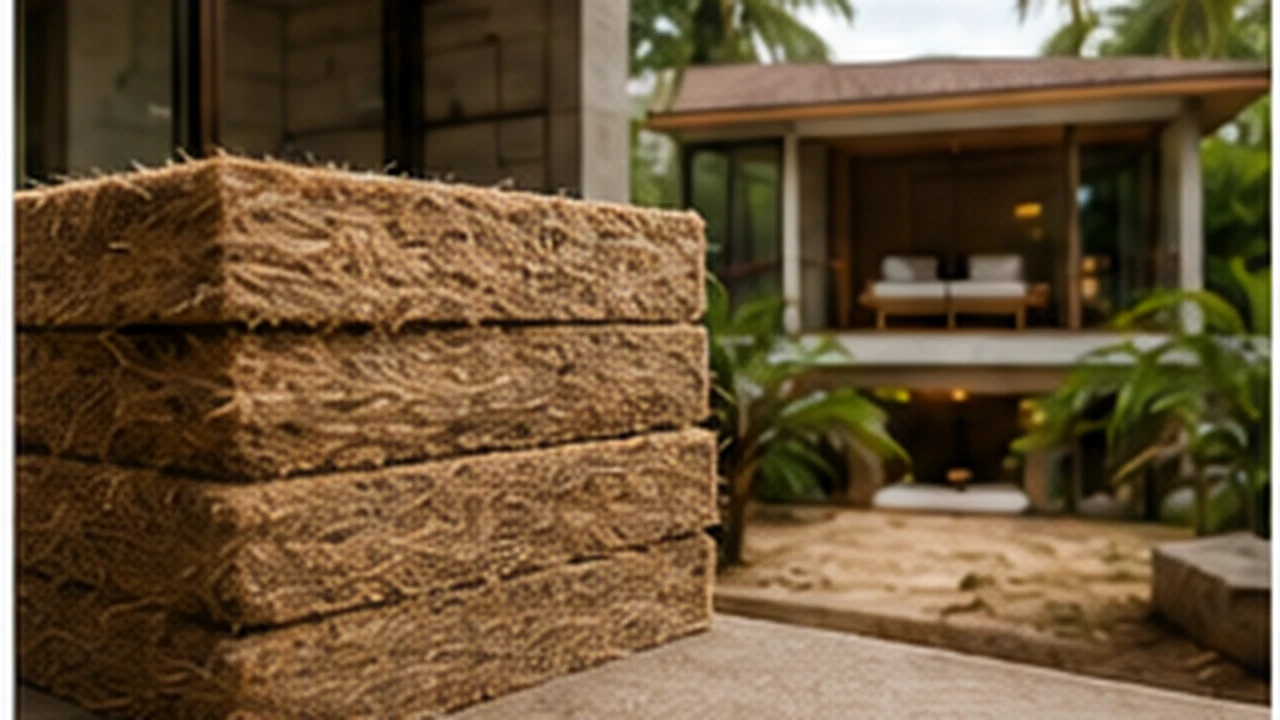
A 2026 study tested rigid coconut-husk-fibre panels for thermal, acoustic, flexural and environmental performance in hot-humid buildings.
Read the insight →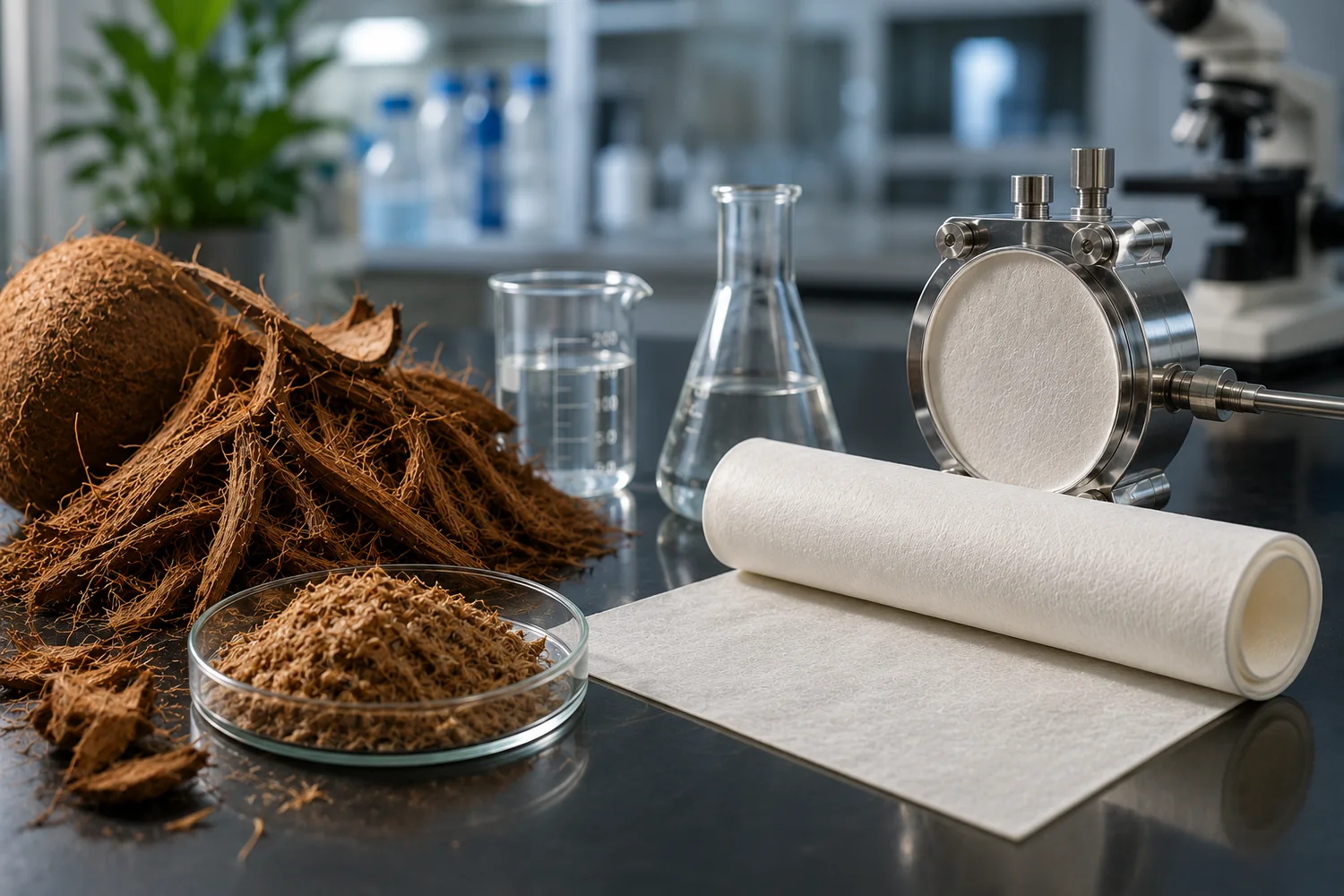
Indonesian-linked 2026 research converted coconut-husk cellulose into electrospun cellulose acetate membranes and tested them against difficult nanoscale aerosol particles.
Read the insight →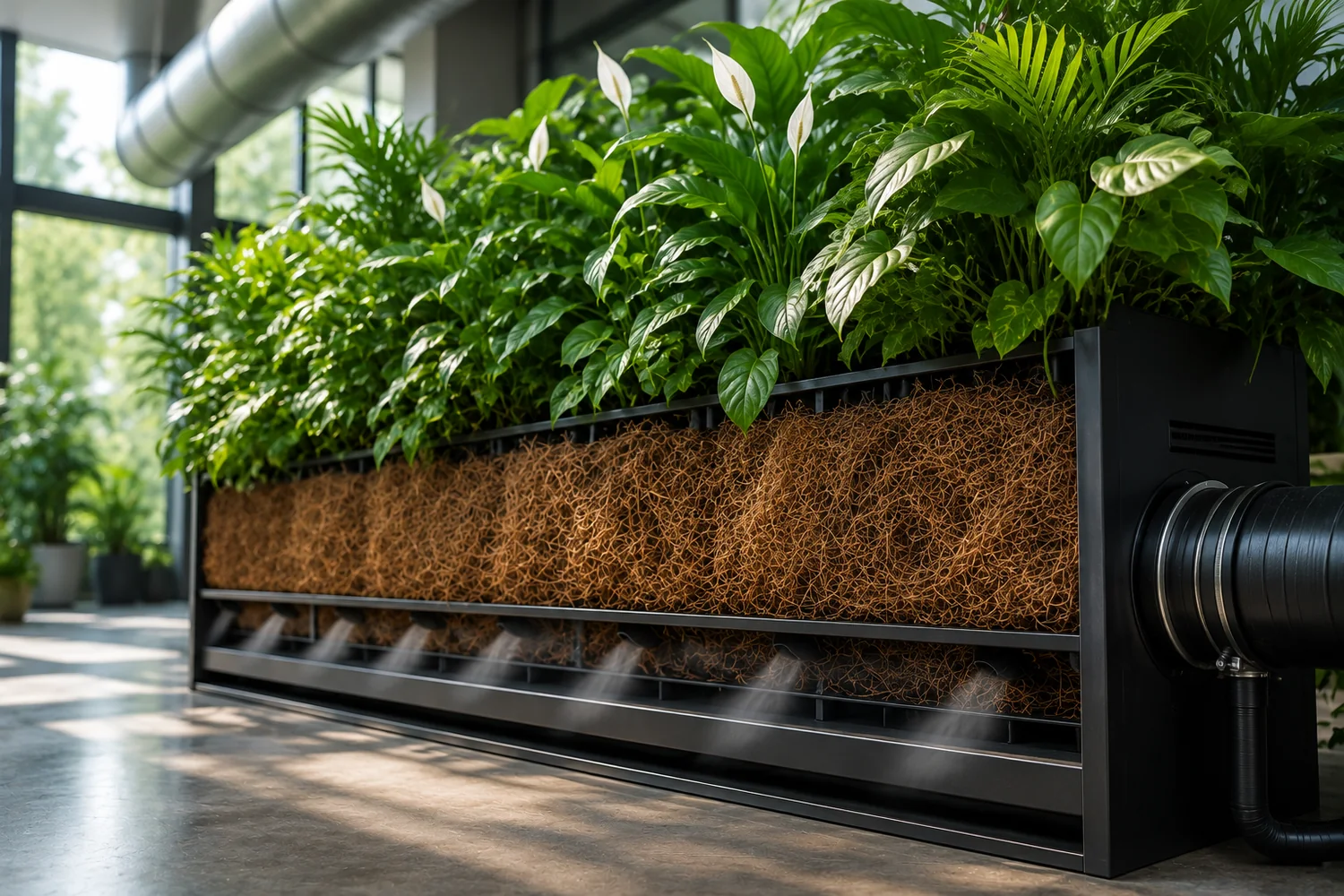
A 2026 active botanical biofilter study tested coconut and kenaf fibres as growth and filtration media for VOCs, PM2.5 and PM10 under controlled airflow conditions.
Read the insight →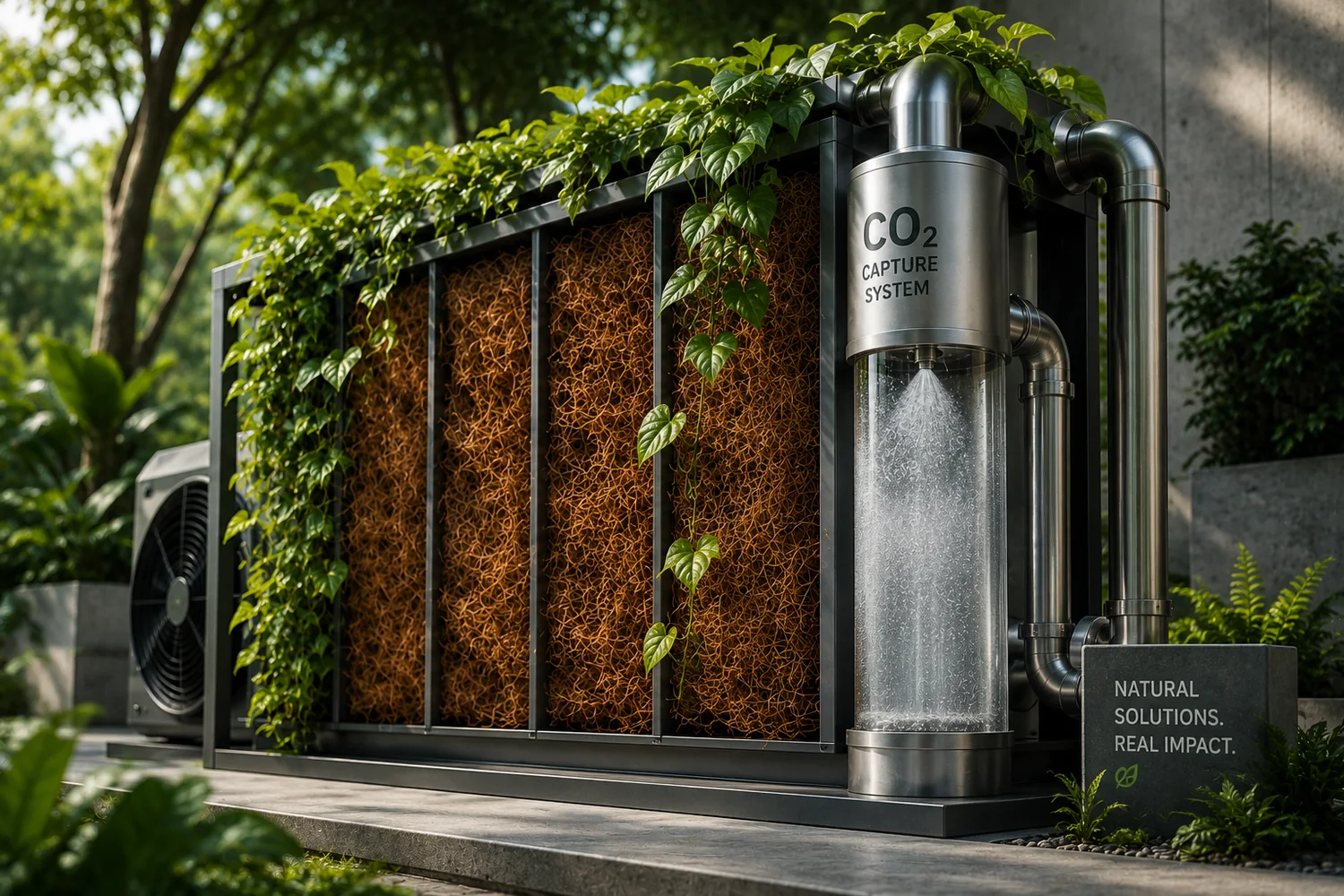
Indonesian researchers combined mist-assisted absorption with coconut-fibre adsorption in a laboratory carbon-capture prototype that reached 65.9% capture efficiency in its strongest tested configuration.
Read the insight →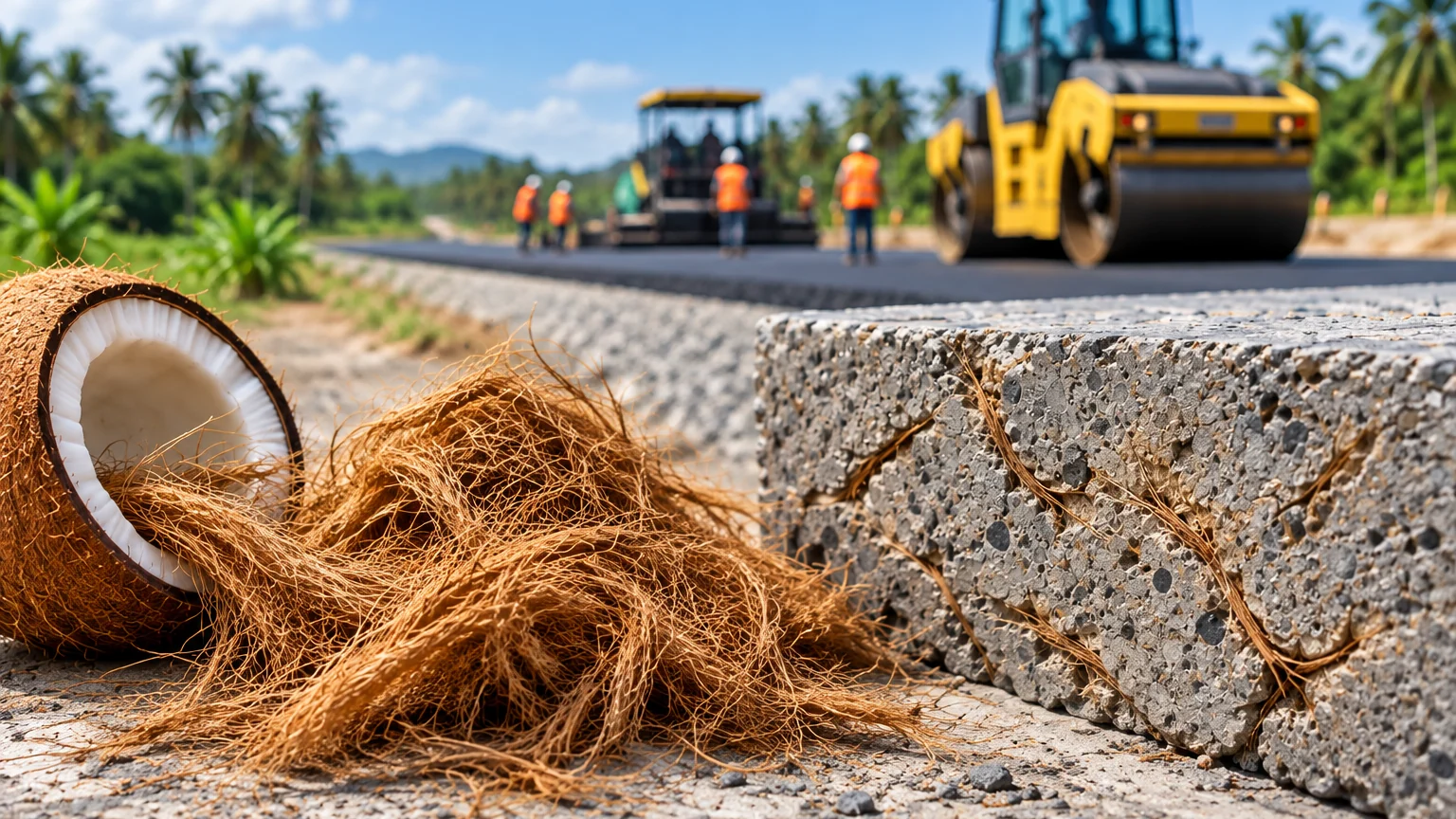
A 2026 pavement-concrete study directly compared discarded coconut coir with synthetic polypropylene fibre and reported strong crack-control and toughness results — alongside important trade-offs.
Read the insight →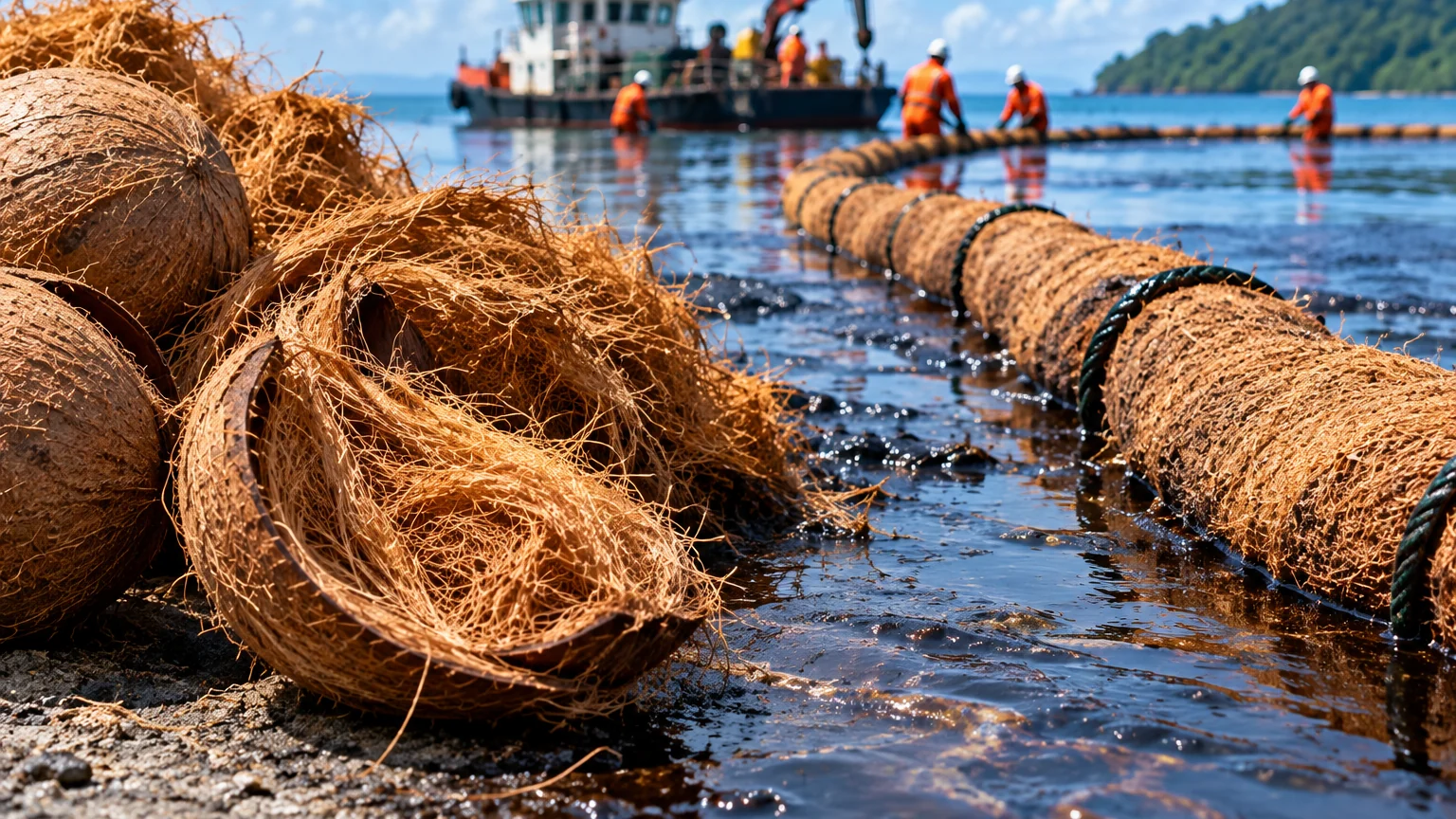
Researchers at Universitas Pattimura tested untreated dried coconut husk as a natural oil sorbent, including coarse and powdered forms and a commercial absorbent benchmark.
Read the insight →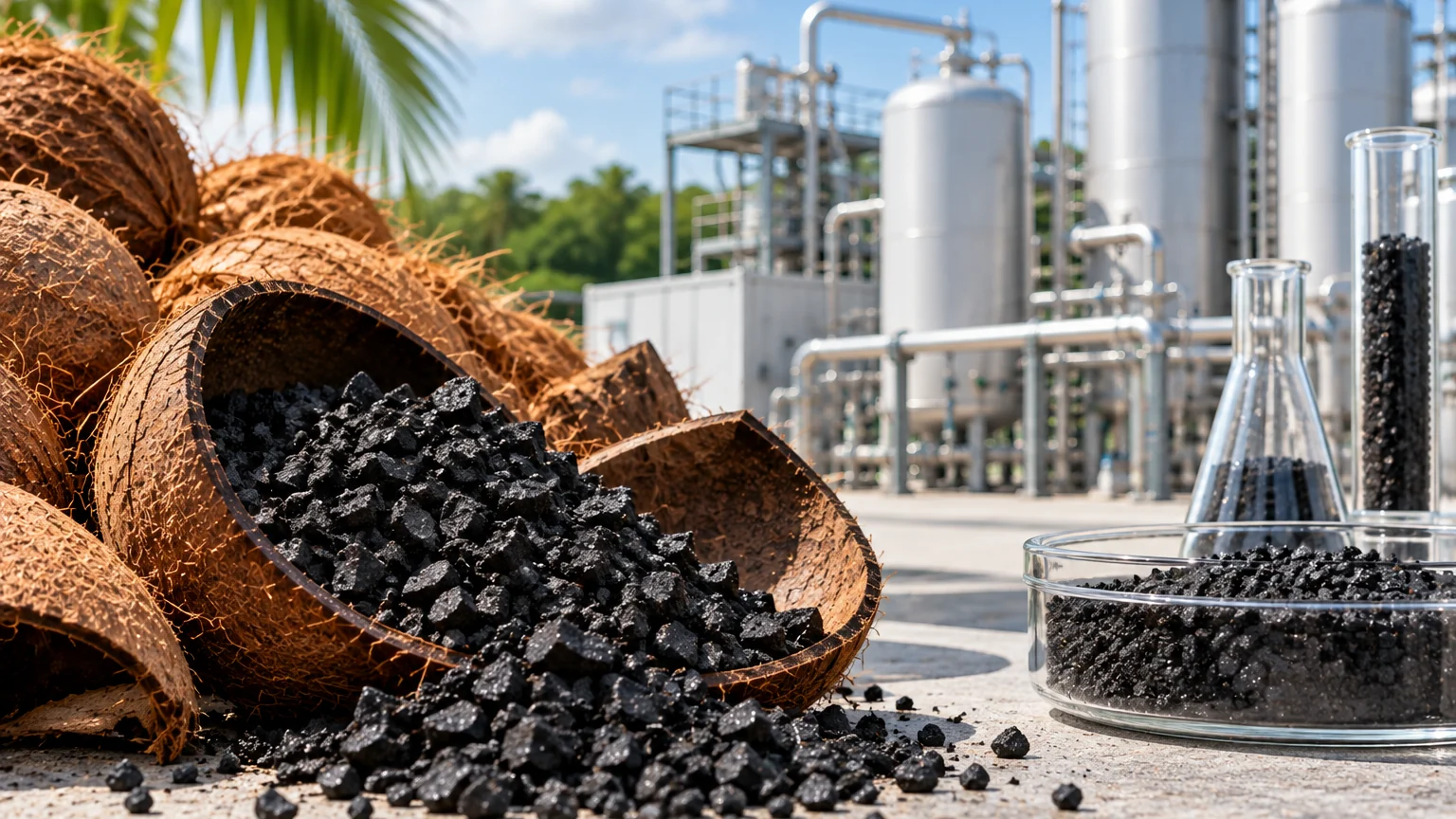
A 2026 hydrogen-energy study tuned the pore structure of coconut-shell activated carbon and measured hydrogen adsorption at cryogenic and room temperatures.
Read the insight →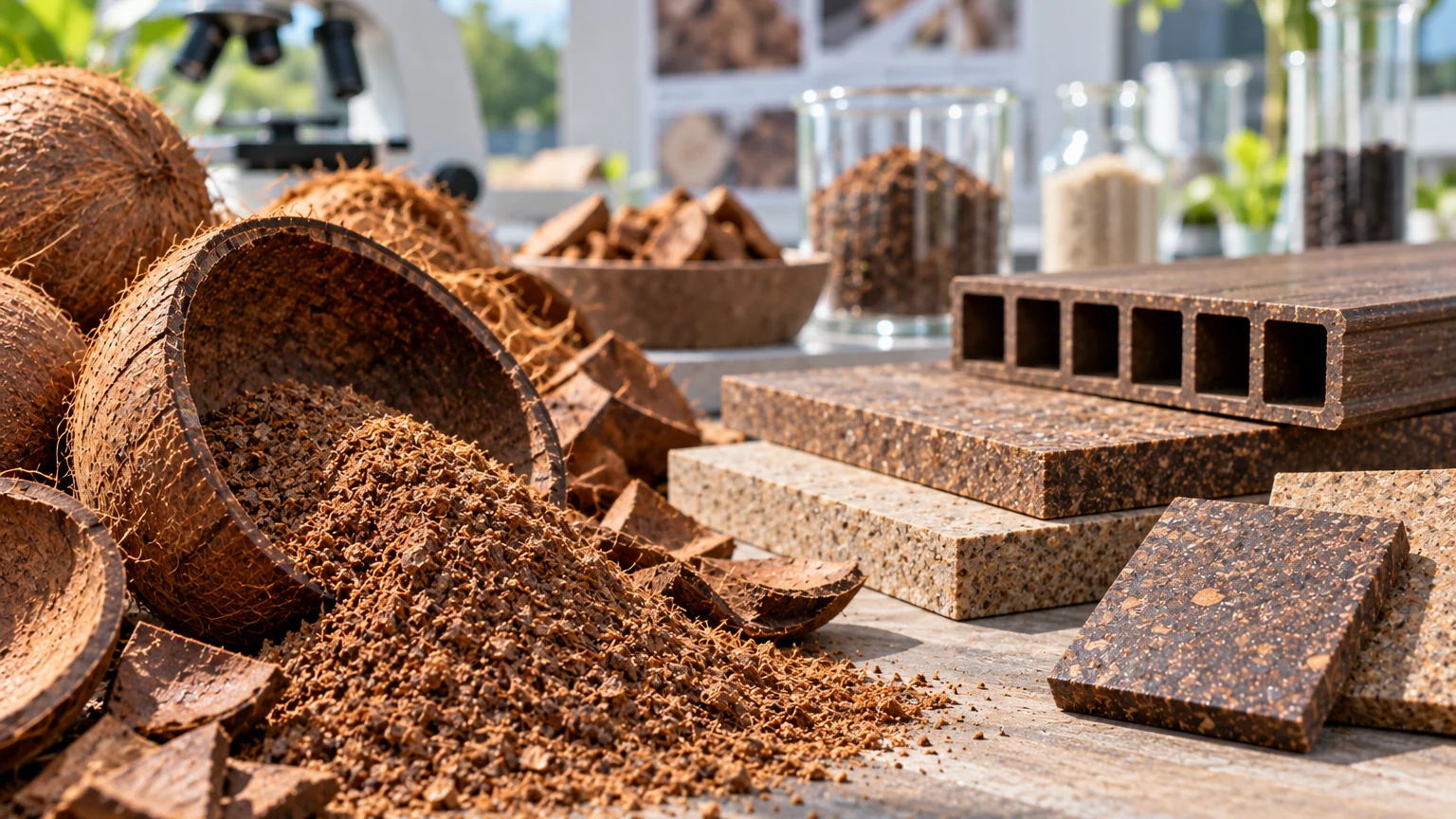
A 2026 materials study turned coconut-shell powder into a self-bonded, coating-free biocomposite using pretreatment and thermal moulding — without adding an external polymer binder.
Read the insight →