
A 2026 lignin-first study explored converting coconut-shell components into aromatic monomers while recovering cellulose-rich material.
1. Coconut shells are more than a fuel feedstock
Shells are commonly discussed in relation to charcoal and activated carbon. Their lignocellulosic composition also makes them interesting to researchers studying chemical feedstocks. A lignin-first process seeks to recover useful molecules from lignin while preserving other biomass fractions.
2. What the 2026 research tested
Researchers reported homogeneous catalytic oxidation using a tetramethylammonium-hydroxide-derived deep eutectic solvent, specifically a TMAH–imidazole system. Under the reported laboratory conditions, they obtained aromatic monomers and recovered cellulose- and hemicellulose-containing fractions.
3. What “aromatic” means here
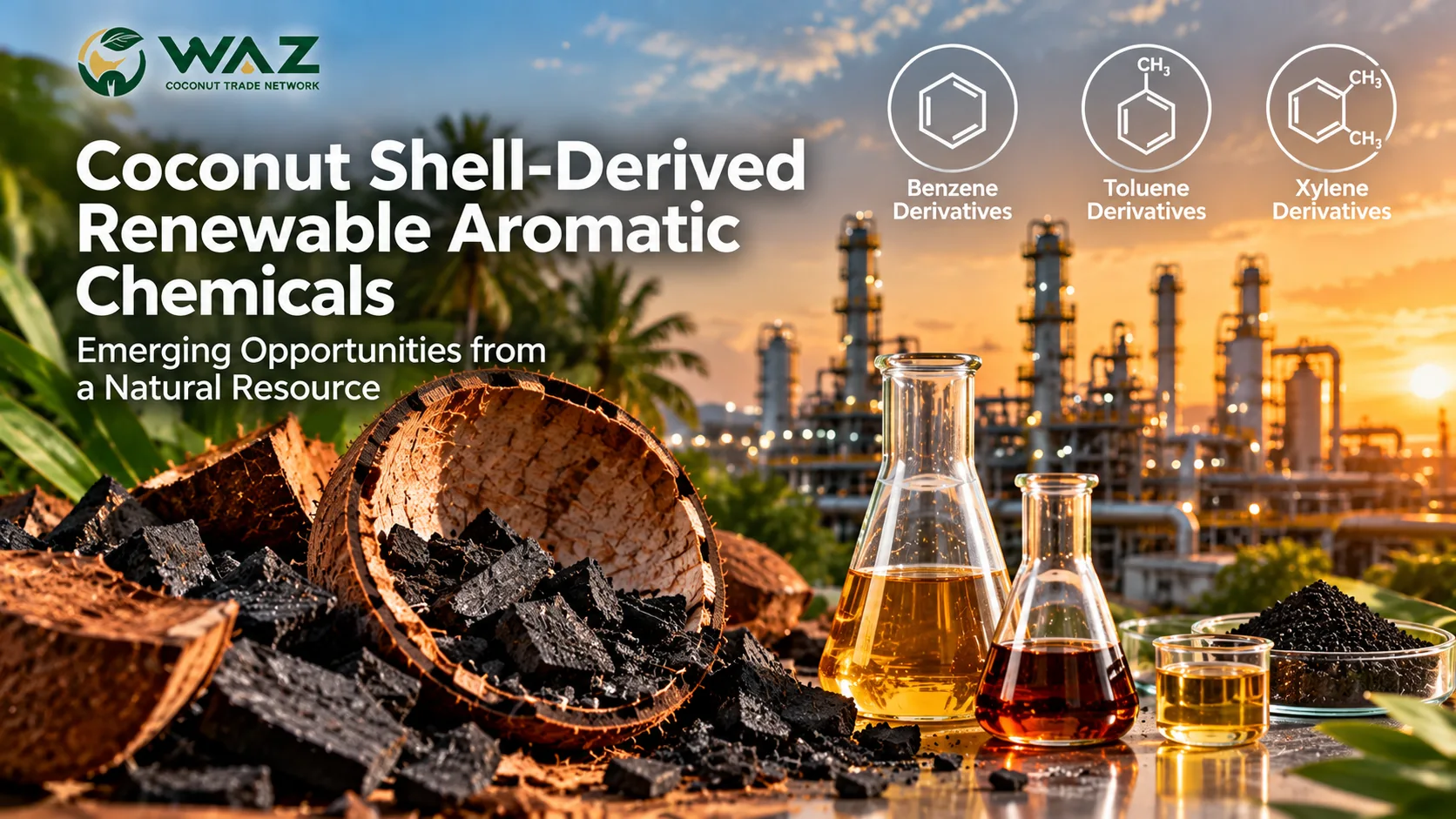
In chemistry, aromatic compounds contain particular stable ring structures. The term does not mean the products are fragrances, nor does it mean a coconut-shell process directly manufactures commercial benzene, toluene or xylene. The article image uses generic chemistry symbolism and must not be read as a product specification.
4. The headline results need context
The paper reported an aromatic monomer yield of 19.5% under a selected experimental condition, alongside carbohydrate recovery. Those figures are specific to the research setup and its yield definitions. They cannot be translated directly into industrial output, saleable product grade or profitability.
5. Chemical handling and environmental assessment
The process uses chemical reagents and requires proper handling, recovery, waste treatment and occupational safeguards. Renewable feedstock alone does not demonstrate lower life-cycle emissions or environmental impact. Scale-up would require techno-economic analysis, independent life-cycle assessment and regulatory review.
6. Where the commercial opportunity might develop
Potential customers would be specialty chemical manufacturers and biorefinery developers rather than conventional charcoal buyers. They would need composition, purity, feedstock consistency and validated processing economics. CTN monitors this pathway as emerging research, not an offer of aromatic chemicals from WAZ.
Research-stage application: do not infer certified product performance, commercial availability, or environmental superiority without application-specific testing.
Sources & further reading
Have a related sourcing requirement?
Share your application, material grade, quantity, destination and testing requirements. WAZ can help structure a discussion with potential suppliers; availability and specifications must be independently confirmed.
Submit Requirement