
Biodegradable coir mesh has been tested for stabilising loose coral rubble, but reef outcomes depend on mesh design, location and ecological monitoring.
1. The problem: unstable coral rubble
Storms and other disturbances can leave loose coral fragments that shift with waves and currents. Mobile rubble can make it harder for coral recruits to establish. Stabilisation is one restoration approach, but it must fit local ecology rather than being applied indiscriminately.
2. What researchers tried
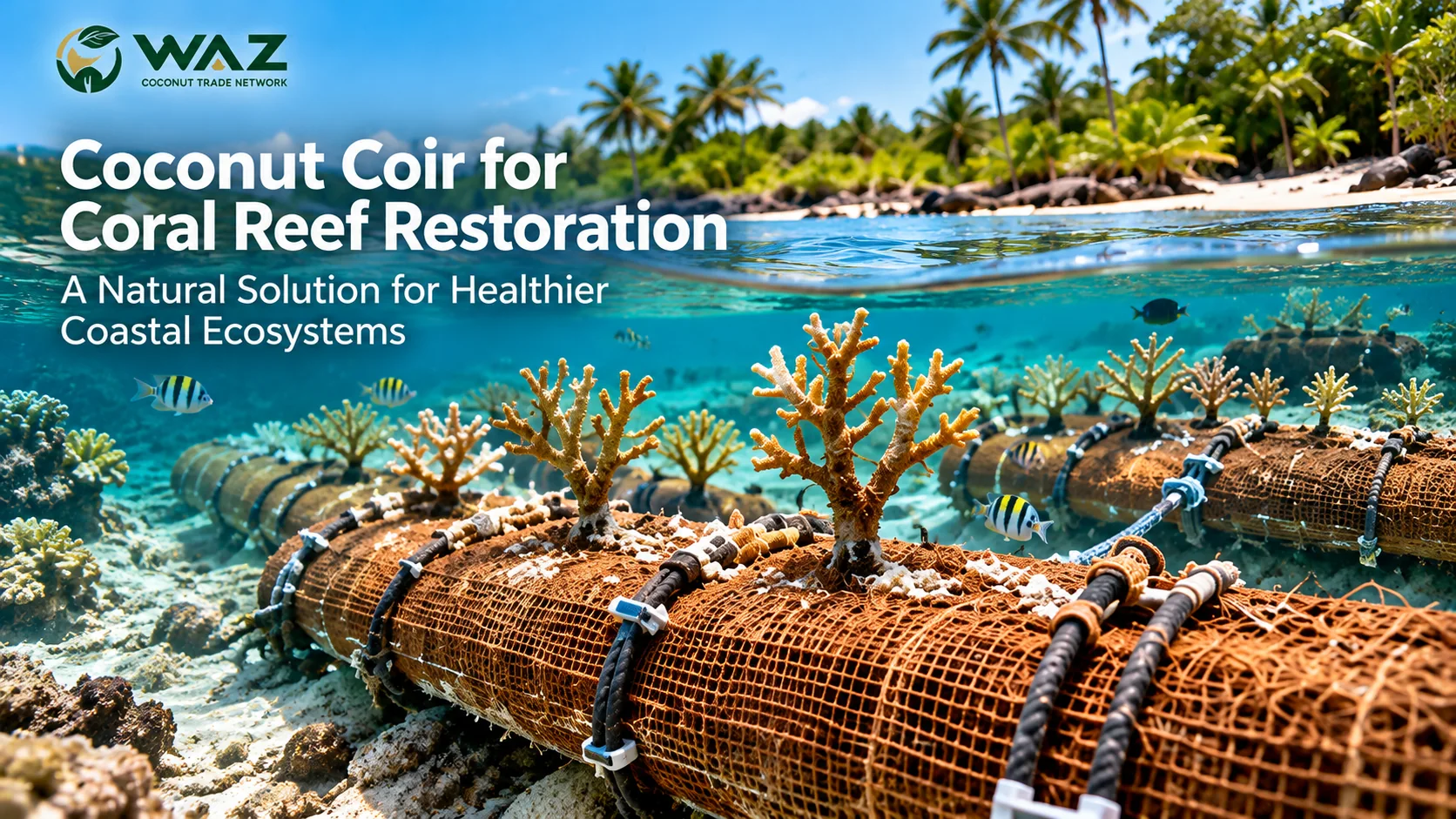
A study in Ecological Engineering tested coconut-fibre mesh bags filled with coral rubble at sites on the Great Barrier Reef. The bags formed three-dimensional rubble mounds and provided temporary stabilisation while the coir biodegraded. Researchers assessed rubble stability, binding, coral recruitment and fish occupancy.
3. Promising results and an important warning
The trial found greater fish abundance above rubble mounds than on surrounding rubble and increased binding within the mounds. However, thick mesh with small openings could hinder coral recruitment. This is a crucial design trade-off: “biodegradable” does not automatically mean ecologically optimal.
4. What 2026 research adds
A 2026 Restoration Ecology paper investigated coir interactions with coral larvae and juveniles, alongside degradation of coir rope in seawater. Its focus on settlement, survival and material persistence illustrates why restoration products require biological testing, not merely tensile-strength or biodegradability claims.
5. What material buyers and project teams should specify
Questions include fibre origin and treatment, mesh aperture, rope diameter, tensile properties, degradation time, anchoring method, site energy, contamination risk and monitoring responsibilities. Marine projects also need local permits and ecological approval where applicable.
6. An emerging application, not a proven universal solution
Coir-based reef structures are experimental and context-specific. The illustrated image is a conceptual depiction, not documentation of a WAZ installation. CTN is tracking the research as a possible future specialised-fibre market, not advertising a certified marine restoration product.
Research-stage application: do not infer certified product performance, commercial availability, or environmental superiority without application-specific testing.
Sources & further reading
Have a related sourcing requirement?
Share your application, material grade, quantity, destination and testing requirements. WAZ can help structure a discussion with potential suppliers; availability and specifications must be independently confirmed.
Submit Requirement